
5 Essential Visual Schedules for Special Education (First Week Survival Guide)
The First Week Overwhelm (And How to Prevent It)
The first week of school is a whirlwind of fresh crayons, new faces, and completely disrupted routines. For our neurodivergent learners, this sudden change from the relaxed pace of summer to the high-demand environment of a classroom can be incredibly dysregulating.
We’ve all been there: staring at a beautifully decorated classroom that quickly dissolves into chaos because students don’t know the new routines. When students don’t know what is coming next, anxiety spikes. And when anxiety spikes, challenging behaviors inevitably follow.
You don’t have to spend the first month of school just putting out behavioral fires. By implementing clear, proactive visual schedules for special education classrooms right from day one, you build a foundation of predictability and safety. Today, we are going to look at the exact tools you need to survive the first week and set your students up for an entire year of independence.
[Insert half-width image/Pinterest pin here, right-aligned. Image should feature a beautifully printed visual schedule, token board, or your classroom setup bundle.]
Stop Reacting to Behaviors: Here is Your First Week Strategy
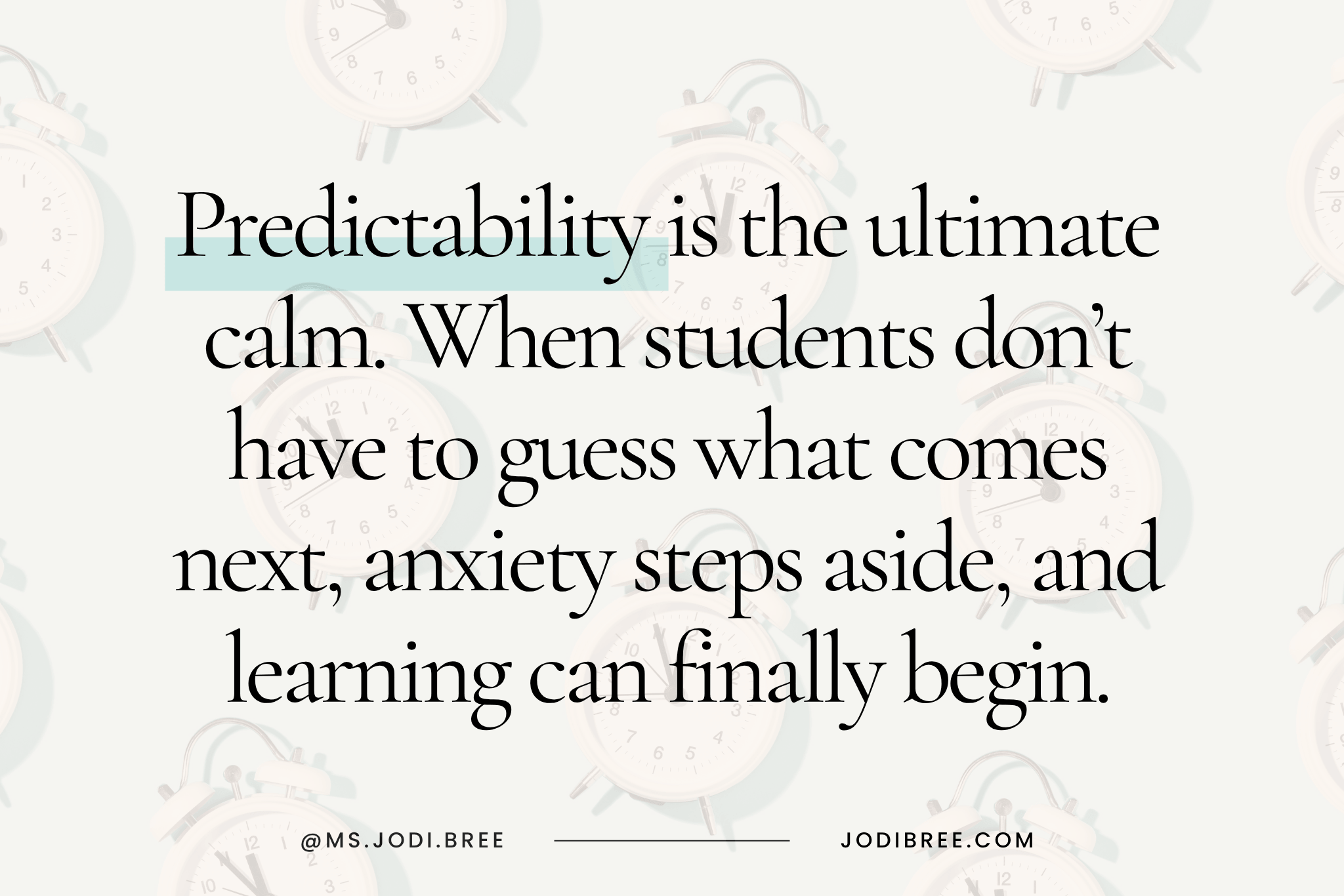
Pin this quote for later! 📌
If you’re sitting at your desk at 6:00 AM on a Wednesday, sipping lukewarm coffee or tea, and wondering how to make the transition from math to recess manageable without a meltdown, I understand your struggle. You are pouring your heart into these students. You deserve resources that work as hard as you do, so you can establish a calm classroom culture immediately.
Let’s support ALL students by giving them the visual communication they need.
Here is my curated list of essential special education visual supports to add to your Special Education toolkit.
The “First Week Survival” Resource Round-Up
To create meaningful and measurable outcomes, you need to establish baseline expectations first. Here are the tools my teacher besties and I rely on to get through the first week of school smoothly.
Visual Schedule Cards Classroom Management Daily Schedule Template EDITABLE Card by Diverse Little Learners
The Struggle: Students are constantly asking, “What’s next?” or feeling completely dysregulated during transitions because they don’t know what the daily flow looks like.
The Solution: A comprehensive, fully editable set of visual schedule cards and templates that let you map out the entire day clearly and easily customize it for your specific classroom needs.
Key Skills: Transitioning, Task Initiation, and Anxiety Reduction.
Day in the Life: My teacher bestie swears by this set. She told me that posting this visual schedule right on her front board completely eliminated her students’ transition meltdowns last year. Because the cards are fully editable, she can map out her exact daily flow from morning meeting to dismissal in minutes!
Real Pictures Visual Schedules for Special Ed (EDITABLE)by Polka Dots Please
The Struggle: Cartoons and clip-art icons can be too abstract for some of our students, leading to confusion when they try to connect the picture on their schedule to actual, real-world objects or locations.
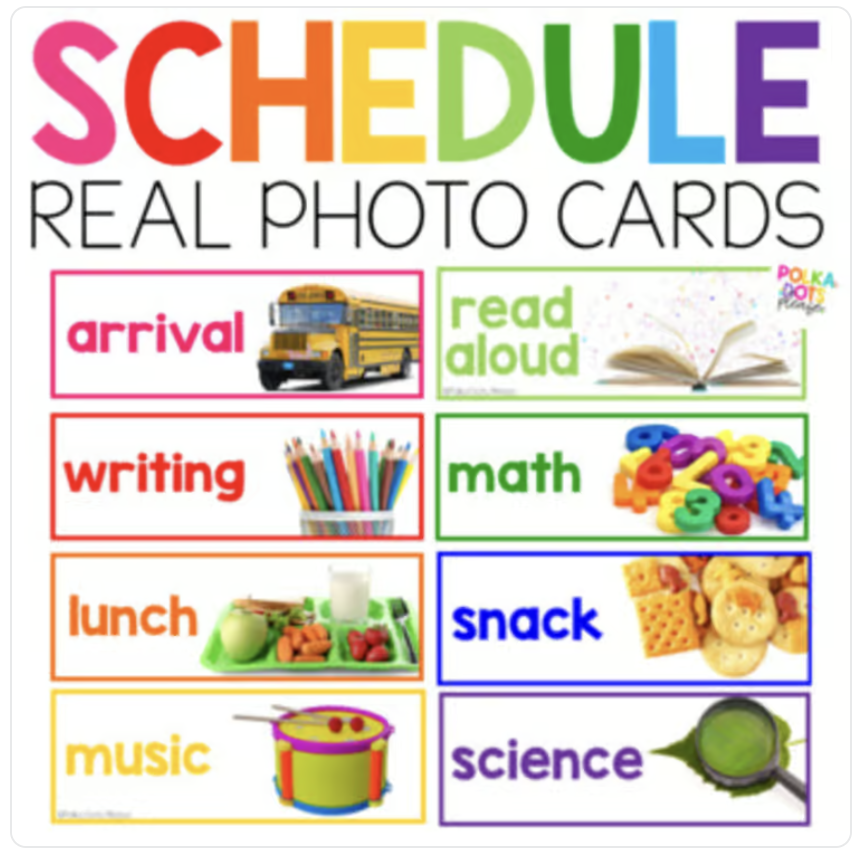
The Solution: A clean, editable visual schedule set that uses real photographs instead of clip art, making it infinitely more concrete and accessible for students with autism or significant cognitive delays.
Key Skills: Visual Literacy, Object-to-Photo Matching, and Real-World Comprehension.
Day in the Life: It’s important to switch to real-photo schedules for students who just aren’t clicking with clip-art icons. Because the pictures actually mirrored real life (like a photo of a real playground or an actual box of crayons), the student can immediately understand the expectations!
First Then Board Picture Schedule Cards Special Education: Visuals, Autism by Brooke Reagan
The Struggle: Task refusal and overwhelming resistance when you ask a student to move away from a preferred activity and dive into something challenging or non-preferred.
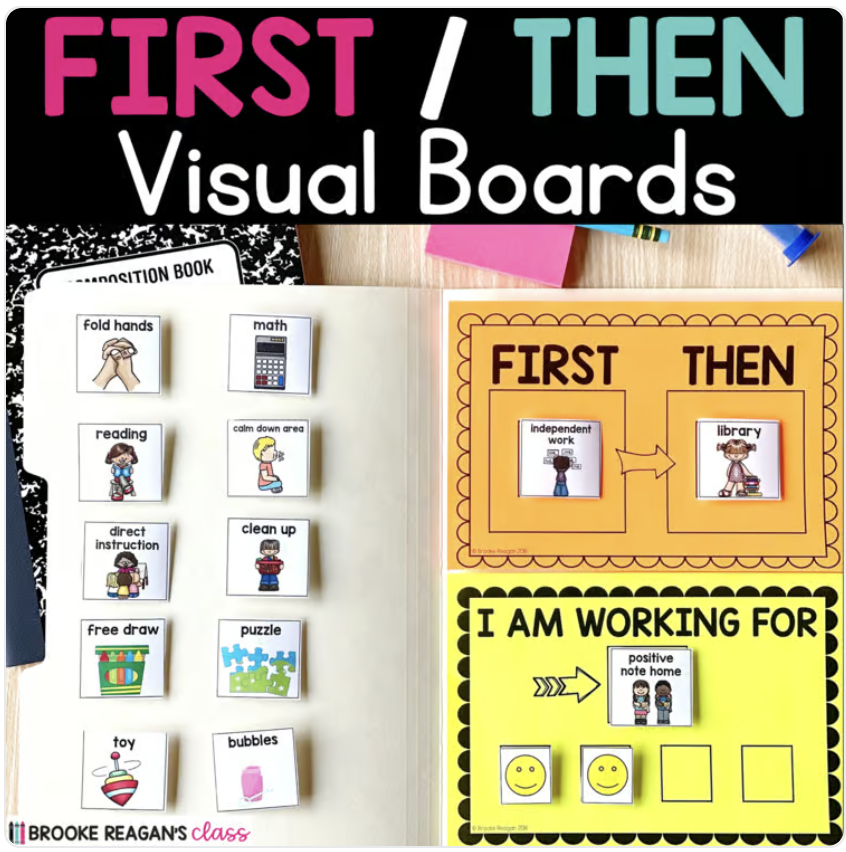
The Solution: A compact, highly effective First/Then board system that breaks down demands into bite-sized, manageable chunks paired with clear visual reinforcement.
Key Skills: Self-Regulation, Task Initiation, and Delayed Gratification.
Day in the Life: Keep these portable First/Then boards ready at your small-group table. Completely eliminated power struggles by simply showing a student, “First, we do math. Then, we get sensory time.” It keeps expectations crystal clear and keeps the day moving without the battles!
Visual Direction/Schedule Cards x 78 Cue Card Prompts by Clever Classroom
The Struggle: Trying to verbally explain multi-step directions during a chaotic back-to-school activity, only to have half the class look at you like deer in headlights.
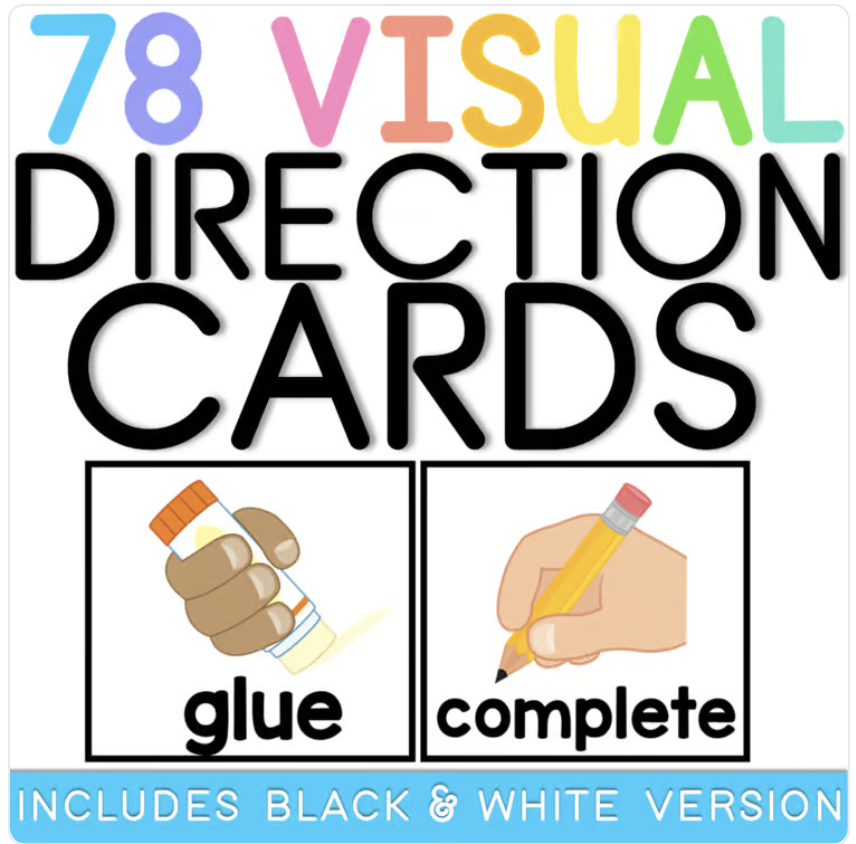
The Solution: A massive set of 78 visual cue cards and direction prompts that you can use in endless ways around the room to support student independence right from day one.
How to Use It: These cards are versatile. You aren’t limited to just putting them on the main board; you can easily slap them onto student desks as individual task prompts, clip them to lanyards for quick, on-the-go cueing in the hallway, or use them during small groups to help kids transition between stations without constantly asking, “What do I do next?” It’s like having a universal translator for classroom expectations when routines are brand-new!
Back to School Classroom Management Visual Schedule, and Rules - Prek / Kinder by Dream Big Little One Preschool Activities
The Struggle: Teaching foundational classroom rules and expectations to young or early-elementary special education students who struggle to understand abstract verbal commands during the first week.
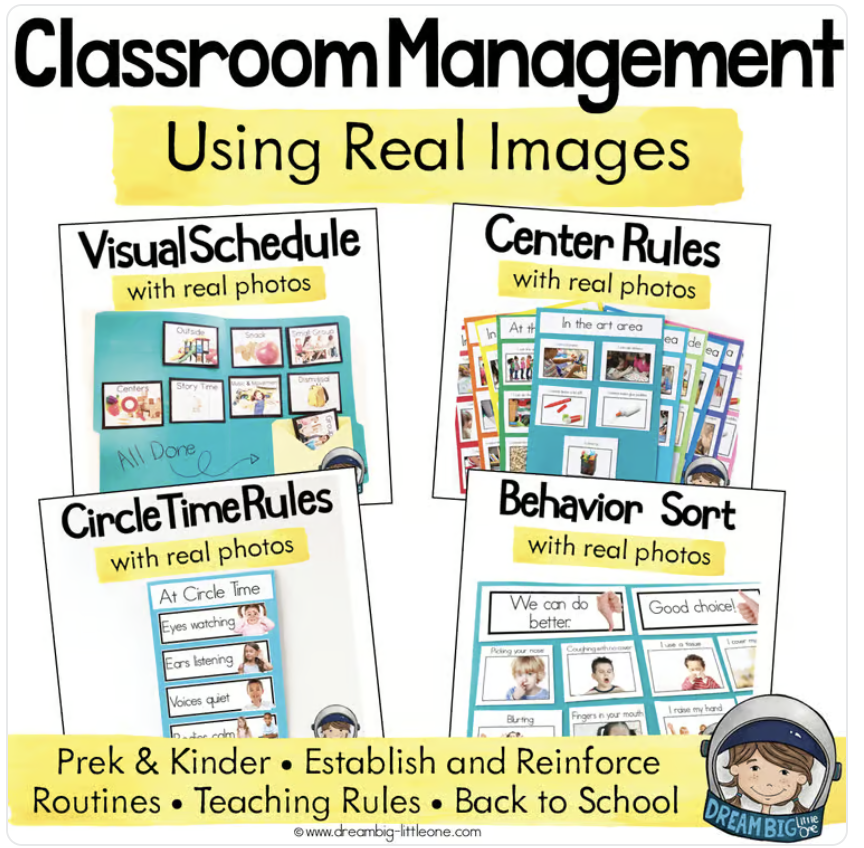
The Solution: A specialized resource packed with visual schedules and clear classroom rules tailored specifically for Pre-K and Kindergarten learners to establish order early on.
Key Skills: Rule Comprehension, Routine Establishment, and Behavioral Expectations.
How to Use It: This is an absolute must-have for setting up your room’s baseline expectations. You can post these visual rules right next to your front board or circle-time rug, reviewing them every morning so students visually connect safe behavior with their daily routine right from day one!
Keduzer Rainbow Visual Countdown Timer
The Struggle: Time is an abstract concept. When we tell a student, “You have five minutes left of free play,” they often experience severe anxiety or meltdowns when transition time arrives because the end feels sudden and unpredictable.
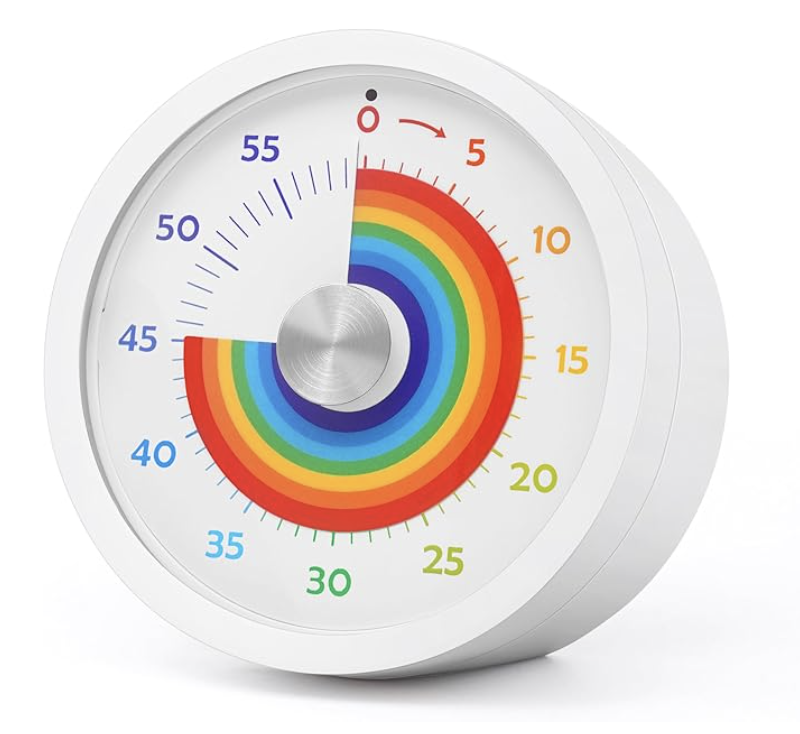
The Solution: A countdown visual timer (featuring a shrinking rainbow disk) gives students a concrete, physical representation of time passing. As the colored section disappears, time visually ticks away.
Key Skill: Time Management, Transitioning, and Reducing Anxiety.
How to Use It: This is a classroom management essential for the first week of school. Place it on your small-group table or attach it to your whiteboard using its magnetic back. Whether it’s timing a 10-minute independent work session or managing a transition to the sensory corner, students can monitor the countdown themselves without constantly looking to you for answers!
4 Free Quick Wins for Implementing Visual Schedules
You don’t need to buy a thing to start improving your classroom management today. If you want to master your visual schedules for special education classrooms, here are 4 Quick Wins you can prep right now:
Print and Prep Before Day One: Do not wait to see if a student “needs” a visual schedule. Assume they can all benefit from it. Have a whole-class schedule on the board, and personal schedules printed and Velcro-ed for those who need them before the bell rings.
Teach the Schedule (Don’t Just Hang It): A schedule is useless if a student doesn’t know how to interact with it. Spend the entire first week explicitly teaching students how to pull off an icon and move it to the “finished” pocket.
Create a “Finished” Bin:Transitions are smoother when there is a physical action to indicate that an activity is done. Attach a small envelope or plastic bin to the bottom of their schedule board where they can physically place the completed icon.
Keep It Simple: In August, less is more. Don’t crowd a schedule board with 10 icons. Start with 3 or 4 chunks of the day to build their confidence, then expand it as they learn the routine.
FAQs for First Week Classroom Management
If you are feeling the pressure of the upcoming school year, you aren’t alone. Here is a quick-reference guide to the most common questions I get about setting up systems.
Why are visual schedules important for special education? Visual schedules are crucial because they provide predictability and structure for neurodivergent learners. They bypass auditory processing delays by offering a permanent, visual roadmap of expectations. This significantly reduces anxiety, prevents challenging behaviors, and fosters independent task initiation.
How do I introduce a visual schedule during the first week of school? Introduce visual schedules by making them highly interactive and pairing them with strong reinforcement. During the first week of school, physically guide the student to check their schedule, transition to the activity, and then place the schedule icon in a “finished” bin. Pair successful transitions with high praise or a preferred item to build positive momentum.
What are the best classroom management strategies for special education? The most effective special education classroom management strategies are always proactive, not reactive. This includes utilizing clear First/Then boards for non-preferred tasks, establishing token economies to build stamina, and maintaining consistent, predictable routines supported by visual timers and environmental boundaries.
Let’s Have a Calm, Successful First Week!

Surviving the first week of school doesn’t require magic; it requires a plan. By proactively implementing visual schedules, you are removing the anxiety of the unknown for your students. When they feel safe and know what to expect, the learning can finally begin.
If you want to save your weekends and skip the endless laminating and formatting sessions, join my newsletter for monthly SPED survival tips, free resources, and actionable advice delivered straight to your inbox. Let me do the heavy lifting.
Found this post helpful? Share this article with other educators! If you liked this post, pin it to Pinterest.👇
Let’s chat! What is one routine, boundary, or visual tool that completely saves your sanity during the chaotic first week of school? Drop a comment below and share your favorite survival trick—we are all in this together! 🍎💬