
10 Essential Back-to-School Special Education Resources for Teachers (To Save Your Sanity)
The Back-to-School SPED Overwhelm is Real (But You’ve Got This)
I know that feeling all too well. It’s August. You walk into your classroom, breathe in the smell of fresh floor wax, and then you look at your desk. Waiting for you is a massive stack of thick IEP files, a brand-new roster of students you haven't met yet, and a schedule that somehow has you in three different places at once.
We’ve all been there: staring at a mountain of paperwork, wondering how we are going to manage it all before the first bell even rings.

If you’re sitting at your desk at 9:00 PM on a Sunday, wondering how to make your new caseload manageable and your data collection actually accessible. I have been that teacher, piecing together systems late at night. But here is what I have learned after years in the trenches: you don't have to just "survive" this season.
By building a streamlined, professional toolkit of resources special education teachers can rely on, you can automate your paperwork. You deserve resources that work as hard as you do, so you can actually enjoy your evenings and weekends while still honoring our biggest promise: supporting ALL students.
Stop Spending Your Weekends Modifying: Building Your SPED Toolkit
“Differentiation isn’t about working harder; it’s about building systems that give kids access.”
To create meaningful and measurable outcomes for each individual student, you need the right tools in your hands on day one. Over the years, I have curated and created the ultimate back-to-school special education resources for teachers.
🎁 FREEBIE ALERT: Before we dive into the toolkit, do you want to cross one major thing off your to-do list right now?
Click below to download your FREE Special Education Calendars and Trackers!
Here are the top 5 tools my teacher besties and I personally use to keep our sanity intact, and how they can transform your classroom, too.
Special Education Teachers Starter Bundle | 20 Essential IEP Resources by Legit Learning
The Struggle: Juggling a massive new caseload, endless compliance paperwork, and trying to piece together tracking forms from scratch when the school year starts leaves you buried before students even walk through the door.
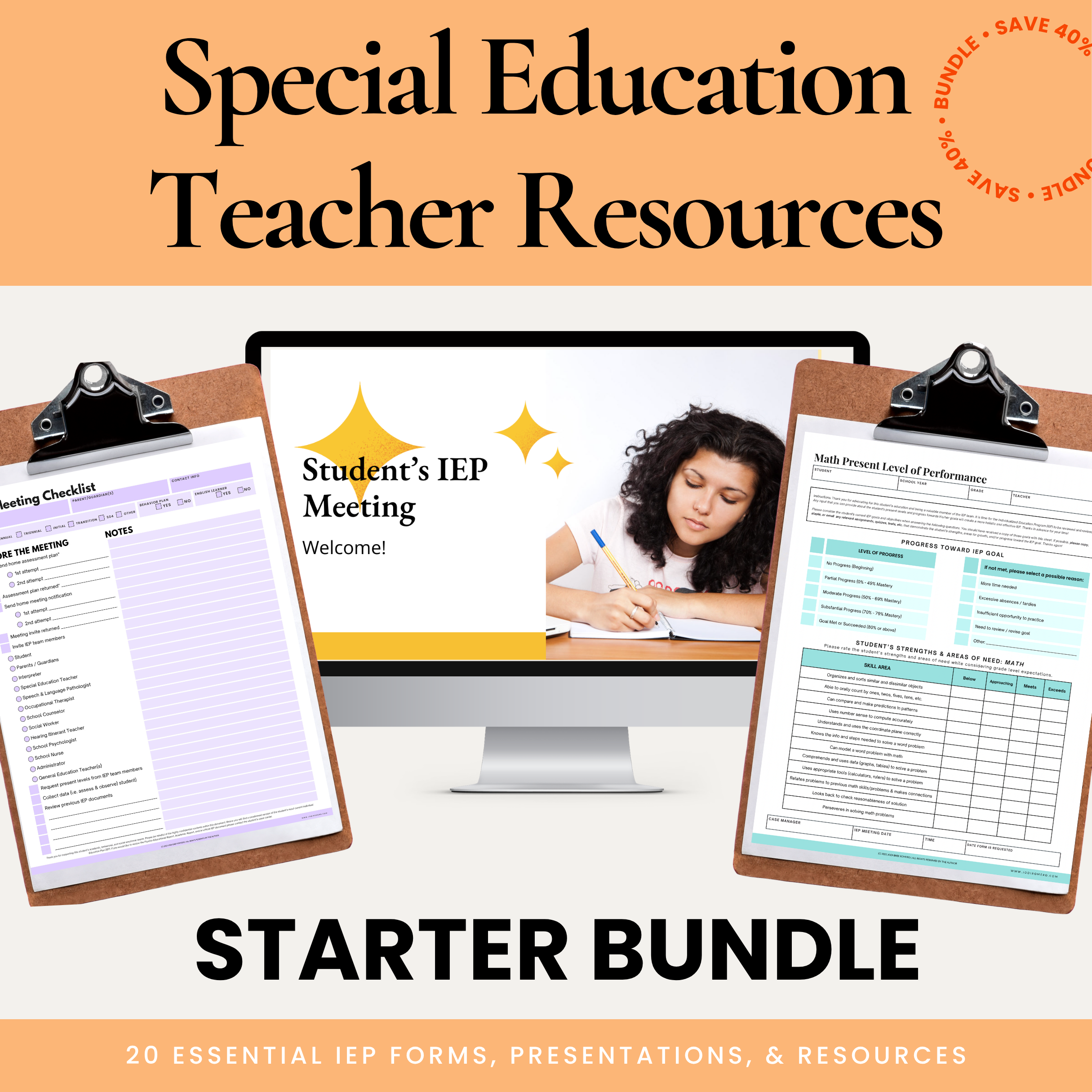
The Solution: My complete starter bundle featuring 20 essential IEP, data collection, and classroom management resources designed to take the guesswork out of your paperwork right from day one.
How to Use It: Keep this as your go-to digital and printable command center. Whether you are prepping for your first round of IEP meetings or organizing student goal sheets, having these 20 core resources unified prevents mid-year burnout and keeps your documentation completely stress-free!
2. IEP Goal Database | Individual Progress Monitoring Made Simple by Sheets that Teach
The Struggle: Writing, organizing, and tracking a massive roster of unique IEP goals can feel like a guessing game at the start of the school year, leaving you buried in tracking sheets.
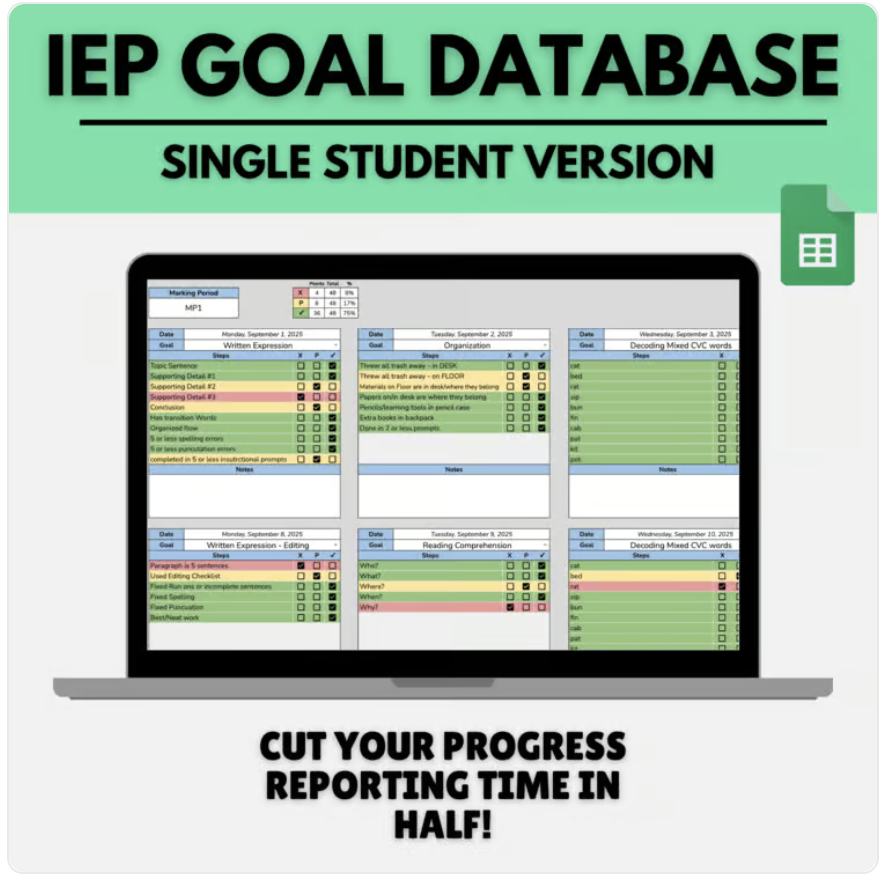
The Solution: Created by a talented teacher friend, this IEP Goal Database simplifies individual progress monitoring, letting you organize and track student growth without the usual paperwork headache.
How to Use It: Pull this up right at the beginning of the year to centralize all your goal tracking. It takes the stress out of reporting and makes keeping tabs on student milestones so much easier!
3. The Stress-Free IEP Meeting Presentation
The Shared Struggle: IEP meetings can easily become disorganized, defensive, or dominated by one voice. Parents often leave feeling overwhelmed by the jargon. The student’s voice is rarely heard.
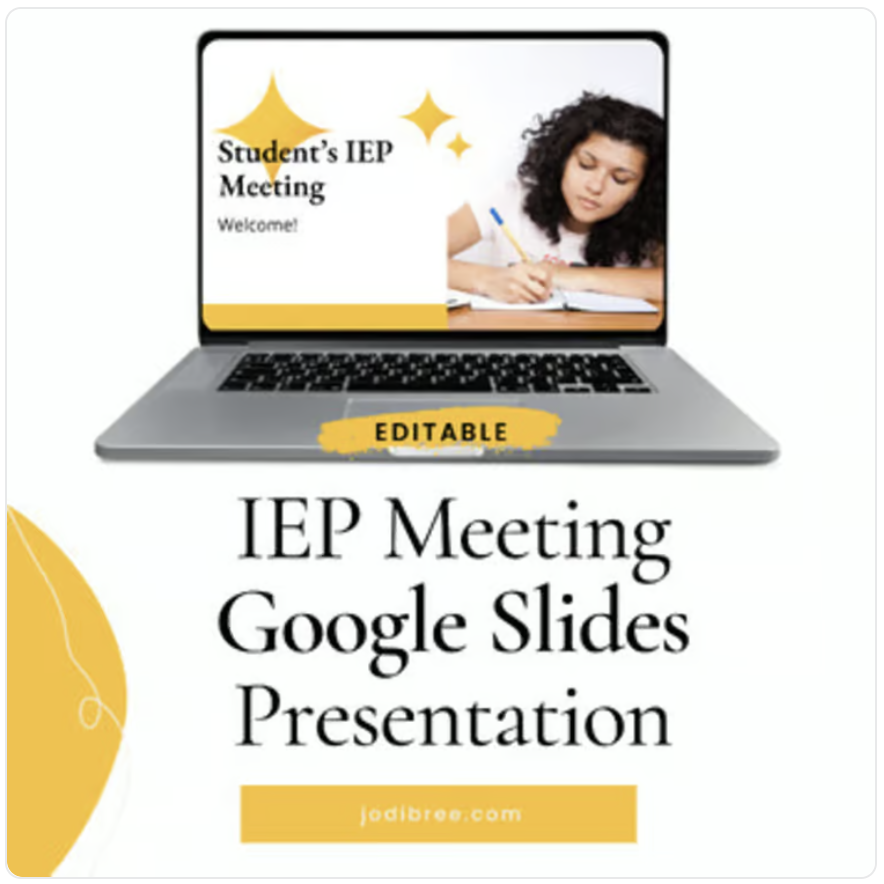
The Solution: This visual Google Slides deck with a standardized IEP meeting agenda provides a clear roadmap for the meeting. It prioritizes student strengths and legally required components while keeping everyone focused, involved, and heard.
How I Use It: I project this presentation during every meeting. It completely shifts the room's dynamic. It visually guides parents (and students) through the data and ensures we involve ALL IEP team members, especially students and parents, in a true collaboration.
4. Proactive Visuals - AAC Alphabet Posters & Core Word Alphabet Classroom Decor by Adapted by Kimmie D.
The Struggle: Traditional alphabet posters in classrooms usually feature random pictures (like "A is for Apple" or "X is for X-ray") that don't help our non-speaking or AAC-dependent students connect print to their daily communication systems.
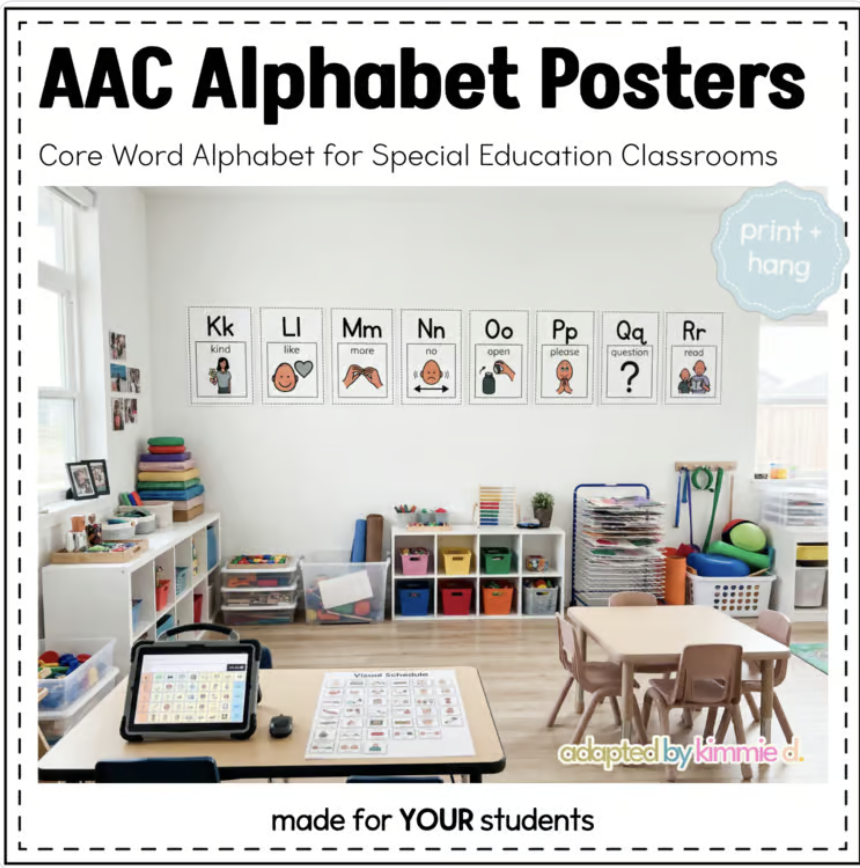
The Solution: Created by fellow teacher-author Kimmie D, these AAC alphabet posters seamlessly integrate core vocabulary words directly into your classroom decor, bridging the gap between functional communication and early literacy. Plus—they’re easy to read and cute!
How I Use It: Hang these around the room so that every single letter reinforces a core word our students use on their communication devices every day. It transforms your wall space into a functional, inclusive tool that truly supports ALL students!
5. The "Done-For-You" Comprehensive Bundle
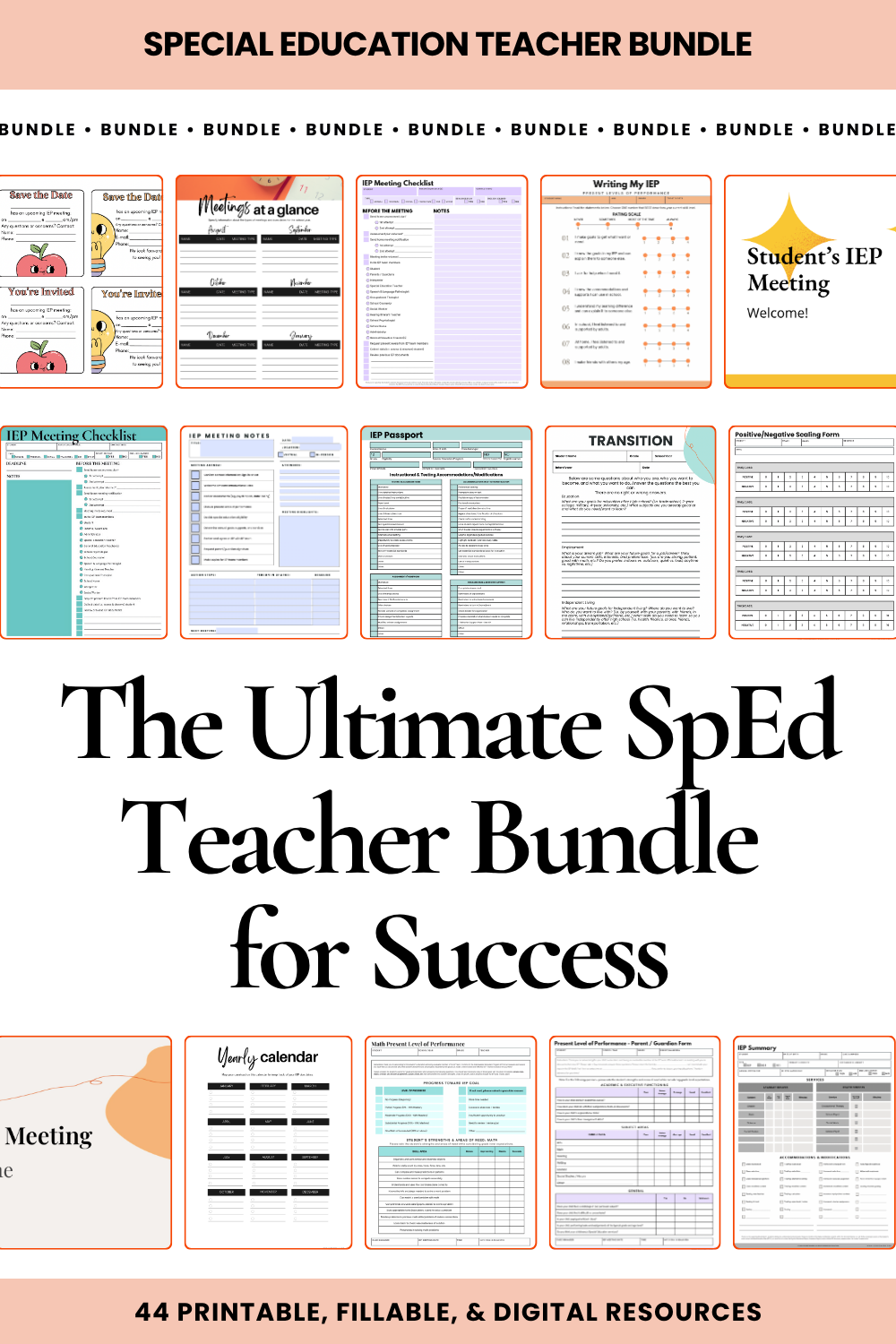
The Struggle: Buying planners, data sheets, meeting templates, IEP checklists, and IEP passports separately is expensive, disjointed, and time-consuming when you just need a cohesive system that works together.
The Solution: A complete, done-for-you toolkit containing every single form, checklist, and data sheet needed to streamline your entire year in one massive, perfectly coordinated bundle.
How to Use It: Keep this bundle handy as your ultimate command center right from day one. Whether you are prepping for a high-stakes annual review or tracking daily data, having everything unified prevents mid-year burnout and keeps your paperwork completely stress-free!
Building Your Village: Community Resources I Love
Building a truly effective Special Education Toolkit means recognizing that no single teacher has all the answers. I am a huge believer in leaning on our community. I also love these tools from fellow teacher-authors and experts that beautifully complement our overarching goal of supporting all students:
6. Yearly Behavior Log | Auto Weekly, Monthly & Yearly Summaries by Sheets That Teach– Created by the teacher friend mentioned above, Sheets That Teach, this automated spreadsheet takes the manual math out of behavior tracking. It automatically pulls together weekly, monthly, and yearly summaries so you can easily spot student patterns and share clear data with parents or IEP teams without spending hours crunching numbers.
7. Behavior & Intervention Data Sheet | Behavior Tracking & Report Generator by Sheets That Teach – Another brilliant tool from the same teacher friend, this sheet simplifies how you log daily interventions and compile notes. It streamlines your tracking so you can spend less time wrestling with paperwork and more time focusing on what actually helps your students progress.
8. Back to School Social Story & Routine Cue Cards – A fantastic, simple tool for introducing new routines and expectations during that stressful first week. Walking through these visuals together on day one helps ease transition anxiety right from the start!
9. Day of School Activities for Special Education Back to School Life Skills – A fantastic, age-appropriate set of activities designed to engage middle school special ed students right out of the gate. Instead of childish worksheets, it focuses on real-world functional skills like navigating a new school map, managing locker combinations, learning classroom jobs, and practicing daily schedule transitions. It's a low-stress way to build confidence, establish routines, and get a quick baseline during those chaotic first days!
10. Back to School Activities for High School - First Weeks of School - Study Skills – A fantastic, age-appropriate resource designed specifically to help high school special ed or life skills students navigate the overwhelming transition back. Instead of childish icebreakers, it tackles practical executive functioning and study skills—like organizing digital files, learning how to manage a high-school planner, and building independent study habits. It’s a wonderful tool for setting older students up for success right from day one!
5 Free Quick Wins for Beginning of the Year IEP Organization
You don't need to buy a single thing to start getting organized today. If you want to conquer your back-to-school prep, here are 5 quick wins you can implement tomorrow morning:
Do a PLAAFP Deep-Dive: Print your roster. Read the Present Levels of Academic Achievement and Functional Performance (PLAAFP) for every student. Highlight their specific accommodations.
Create an “IEP Passport” for Gen-Ed Teachers: Take those highlighted accommodations and put them on a two-page, easy-to-read document. Hand this to the general education teachers who have your students. They will love you for it.
Draft Your Master Calendar: Go through your files and plot every single annual review and triennial re-evaluation date on your print and/or digital calendar right now.
Use an IEP Meeting Prep Checklist: Print a standardized checklist and staple it to the inside of each student's physical file folder. This ensures you never forget to send home a prior written notice again.
Grab your FREE Special education calendars & teackers to get started!
Quick FAQs: Surviving Back-to-School SPED Prep
If you are still feeling the pressure, know that your concerns are completely normal. Here are the most common questions I get from fellow educators this time of year.
What do special education teachers need for back to school? The most important resources a special education teacher needs for back-to-school are standardized data-collection sheets, a master IEP meeting calendar, clear visual classroom schedules, and an organized caseload-tracking system. Having these operational systems printed and ready on day one prevents mid-year burnout and ensures you can collect accurate baseline data immediately.
How do I organize my special education caseload before the school year starts? Start by reading every current IEP on your roster and noting upcoming annual review dates on a master calendar. I always create a "Caseload at a Glance" planner that lists each student, their primary classification, their related service minutes, and their required accommodations. Keep this tracker on your desk at all times! If you prefer a digital tracker, check out this version here:
IEP 40 STUDENT Caseload Tracker | Editable IEP Snapshot + Progress Monitor
What should I include in an IEP meeting presentation? A highly effective IEP meeting presentation should be visual, collaborative, and student-centered. Start with a welcoming slide and a clear agenda. Always highlight the student’s strengths first! Next, review present levels of performance, introduce proposed, meaningful, and measurable goals, and outline the recommended services. Always include a dedicated slide for parent and student input. If you’re looking for a Student-Led IEP Meeting Presentation, check out my Google Slides presentation here:
Student-Led IEP Meeting Presentation Template | 38 Customizable Google Slides
How to keep track of IEP data at the beginning of the year? Keep it incredibly simple. Place clipboards with simple frequency tally sheets or goal mastery trackers in easily accessible zones around your room. Train your paraprofessionals immediately on how to use these specific sheets. Consistency is much more important than complex rubrics when it comes to early-year data tracking.
Let’s Make This Your Best Year Yet
Surviving the back-to-school season in special education really comes down to one thing: preparation. By implementing standardized data sheets, cohesive meeting agendas, and a rock-solid caseload planner, you are giving yourself the gift of time. That is time you can spend actually teaching, supporting your students, and taking your weekends back.
If you want to save even more time and skip the late-night formatting sessions, join my newsletter for monthly SPED survival tips, free resources, and actionable advice delivered straight to your inbox.
Ready to get your weekends back right now? Shop the Full Special Education Bundle in my TpT store to grab all of the essential resources today!
Found this post helpful? Share this article with other educators! If you liked this post, pin it to Pinterest.👇
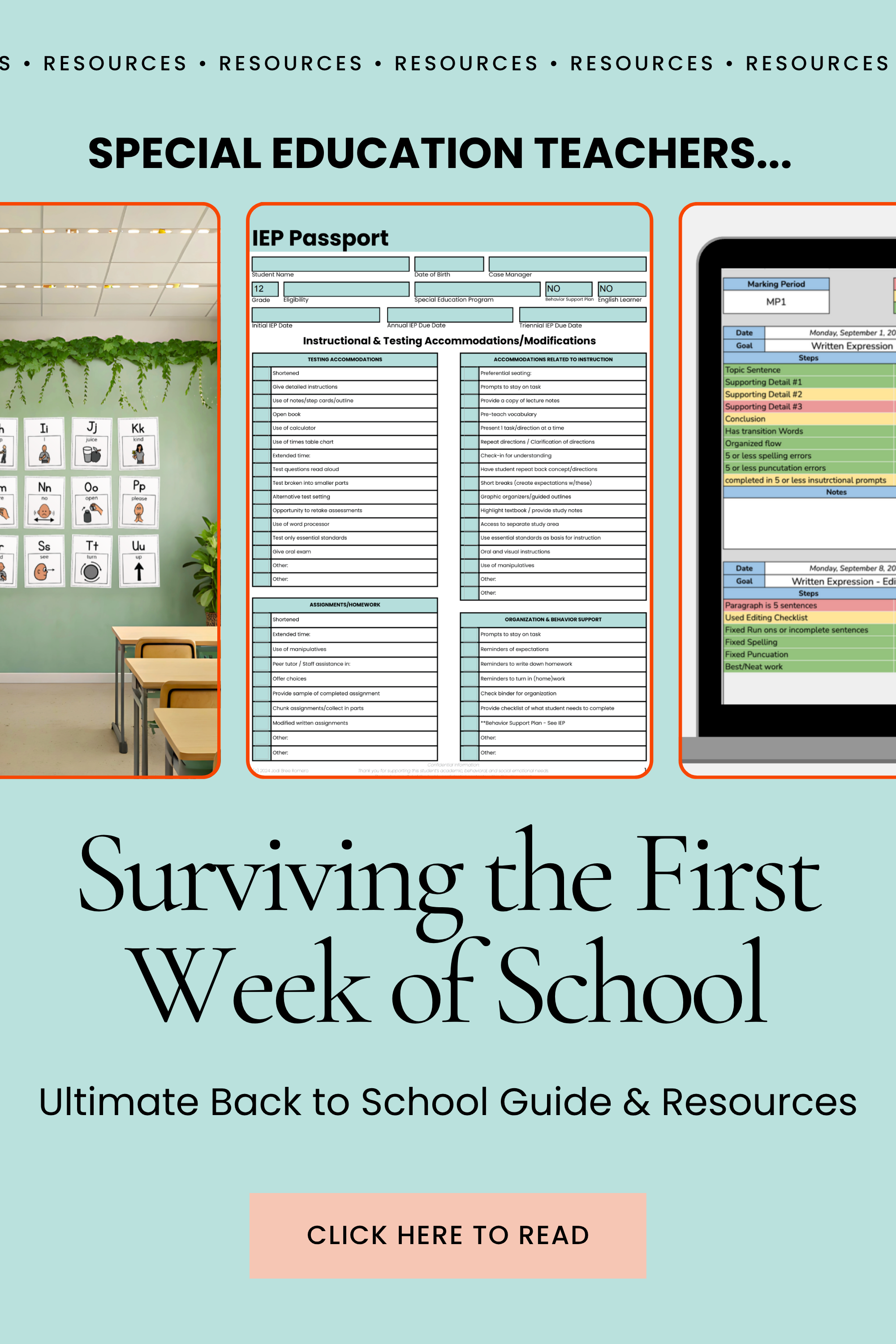
Your turn: What is one thing you always do on day one to help set a calm, positive tone for the rest of the school year? Let me know in the comments below!