
The Step-by-Step Guide to Organizing Your First Special Education Caseload
The Step-by-Step Guide to Organizing Your First Special Education Caseload
Welcome to your first year in special education! You’ve got your classroom keys, you’ve breathed in the smell of fresh floor wax, and then… you see it. The massive stack of thick IEP files waiting on your desk.
The back-to-school SPED overwhelm is incredibly real.
If you are a new special education teacher wondering how to make a brand-new roster of students manageable while keeping track of goals, accommodations, and service minutes, take a deep breath. I have been that teacher, piecing together systems late at night at my dining room table. You don't have to just “survive” this first year; you can actually enjoy it.
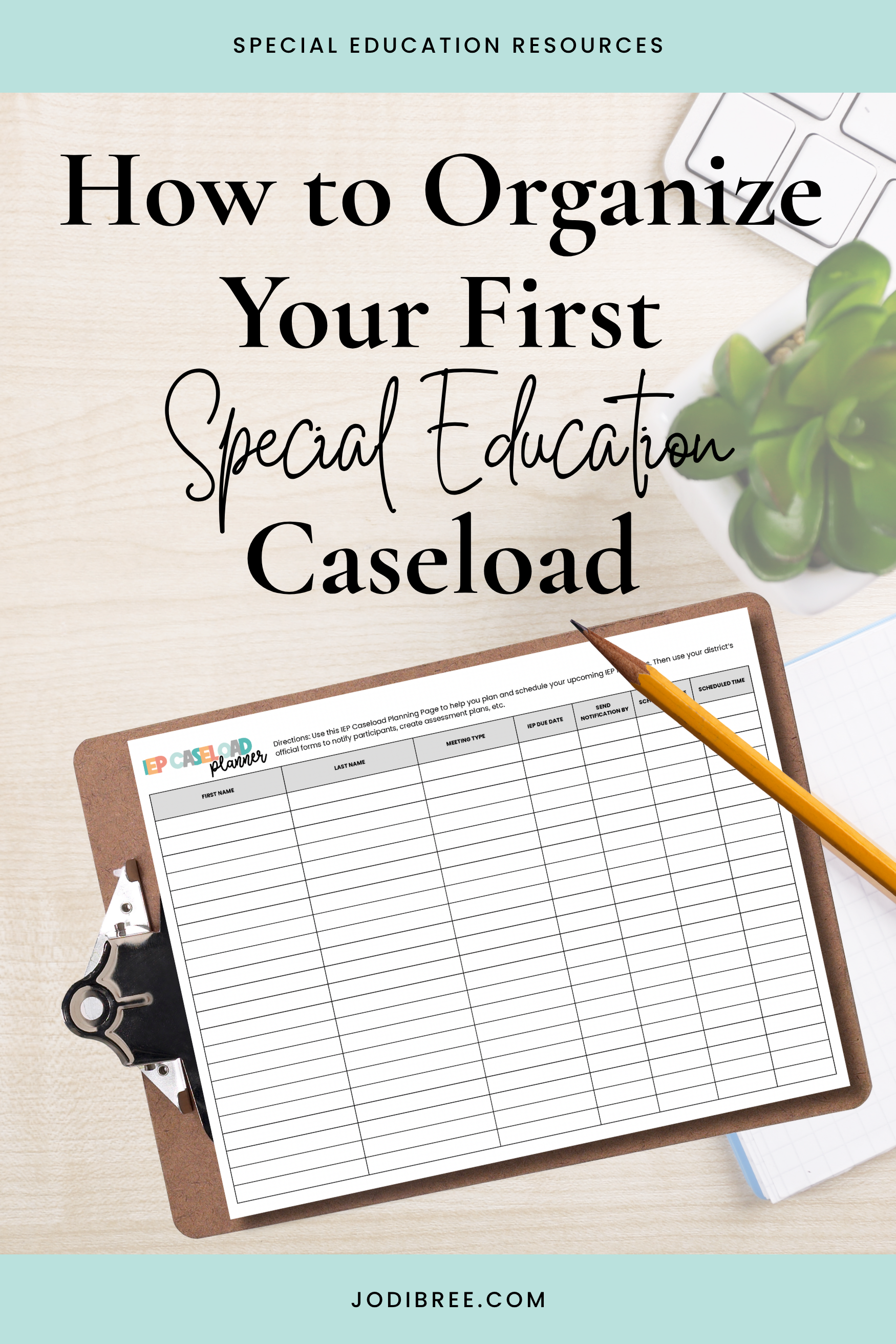
Whether you are teaching in a local district right here in Arizona or across the country, state regulations might vary slightly, but the core of special education caseload management stays exactly the same. By building a streamlined toolkit of special education resources right now, you can automate your paperwork and get your weekends back.
Here is your step-by-step guide to organizing your first special education caseload so you can confidently focus on what matters most: your students.
Step 1: Do a Deep Dive into Every IEP
Before you start printing out cute bulletin board letters or rearranging flexible seating, you need to know exactly who is in your room. Your students’ IEPs are legally binding documents, and knowing them inside and out is your first priority.
Print your roster: Go through every physical or digital file and read the Present Levels of Academic Achievement and Functional Performance (PLAAFP).
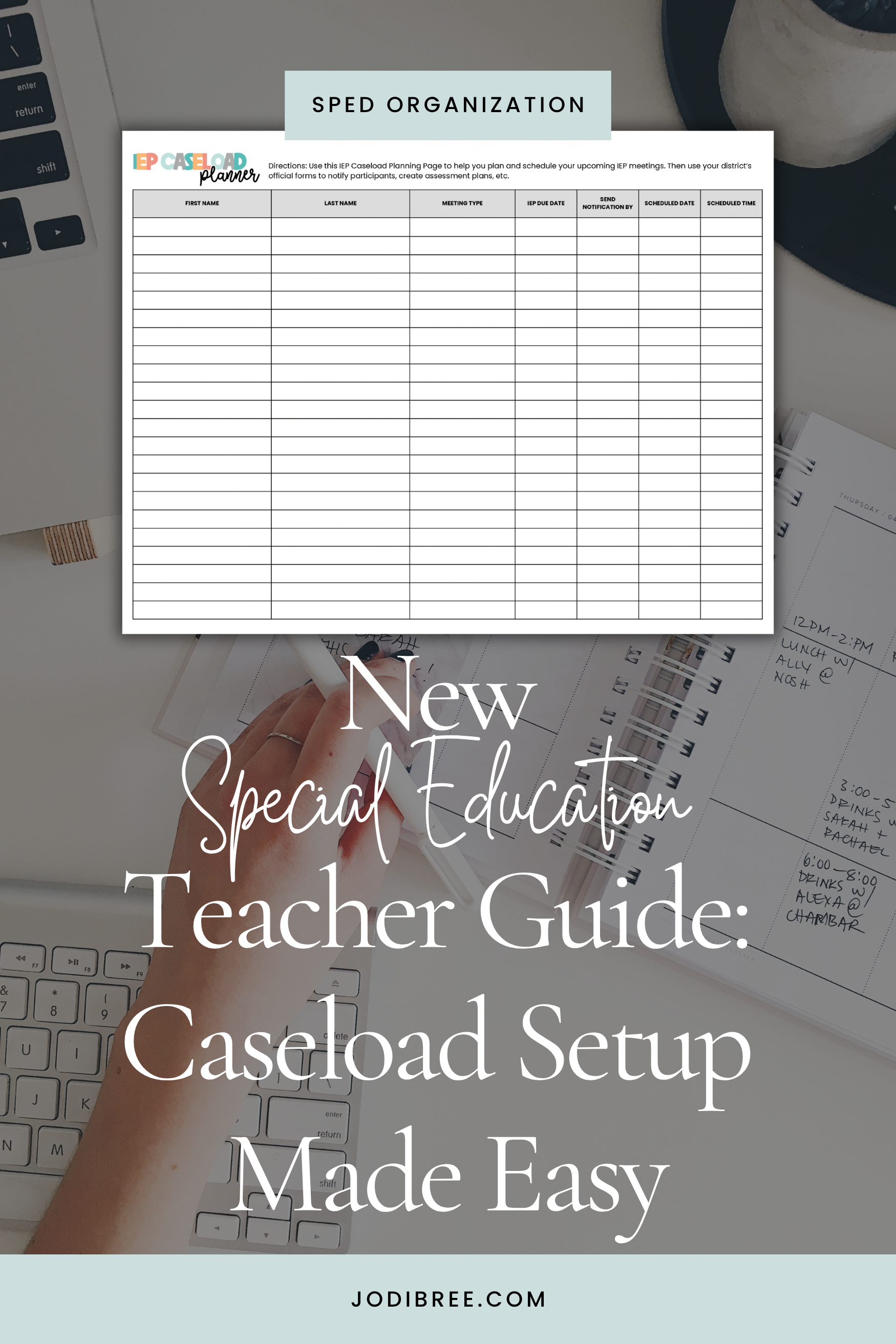
Highlight the non-negotiables: Find the exact accommodations, modifications, and related services (like Speech or OT minutes) each individual student requires. Locate the upcoming annual review and triennial re-evaluation dates for each student, then prioritize these tasks within your IEP Caseload Planner. Organizing deadlines by urgency helps you focus on what's most pressing, reducing stress and ensuring timely compliance, which is essential for managing your workload effectively. Organize those dates in an IEP Caseload Planner to see all dates for the year for every student laid out on a single page.
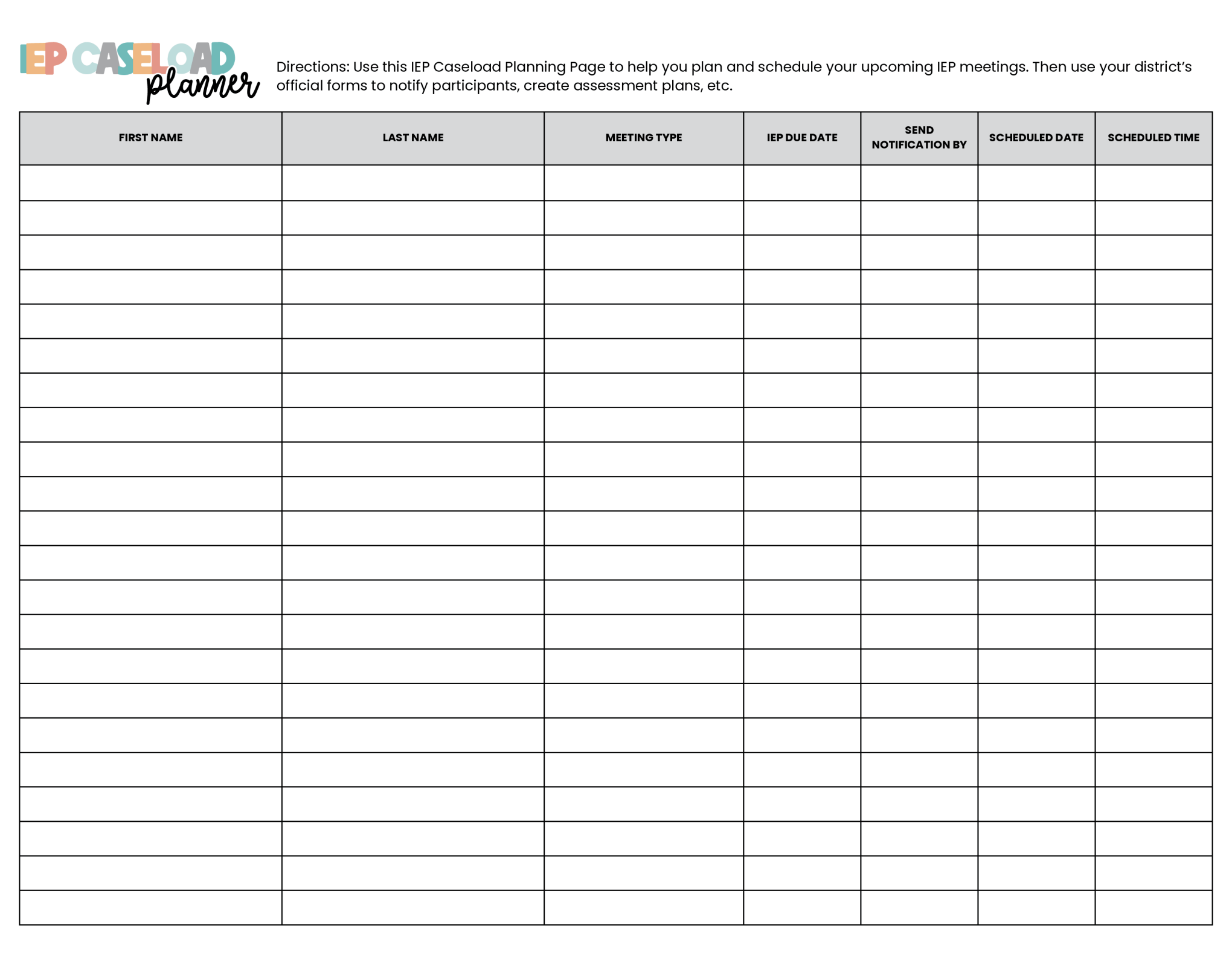
Organize those dates in an IEP Caseload Planner to see all dates for the year for every student laid out on a single page.
Step 2: Set Up Your Data Collection Systems Immediately
Do not wait until the week progress reports are due to figure out how you are tracking IEP goals. Standardize your data collection from day one.
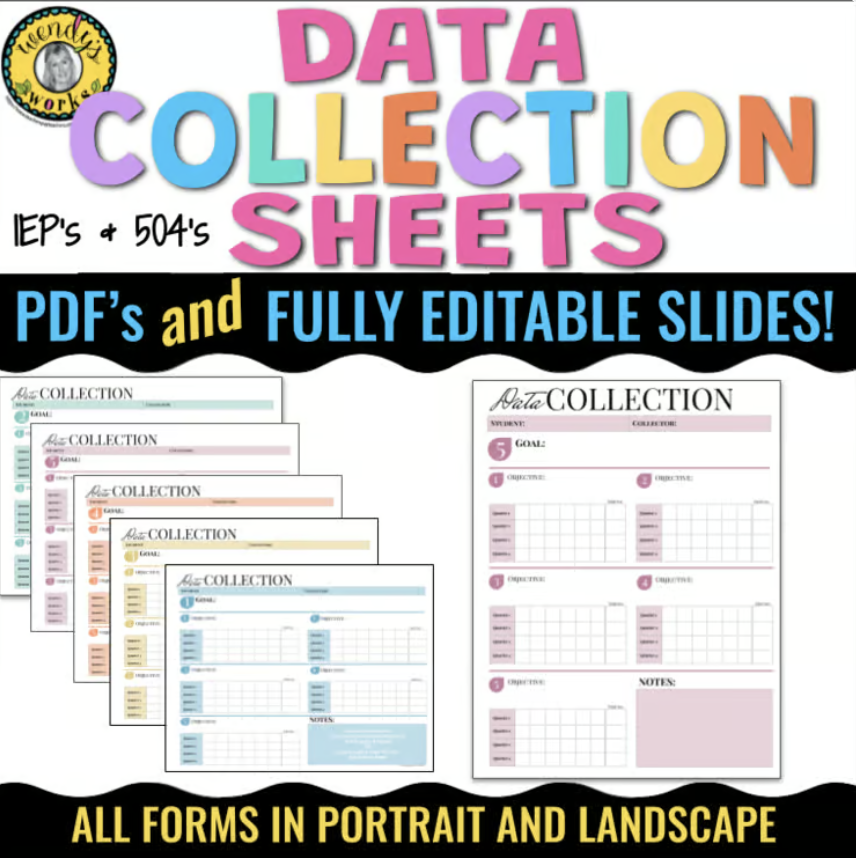
Trying to track behavior or reading fluency on random sticky notes will lead to massive headaches. You need grab-and-go data-collection sheets for special education, available on clipboards stationed in specific zones around your room.
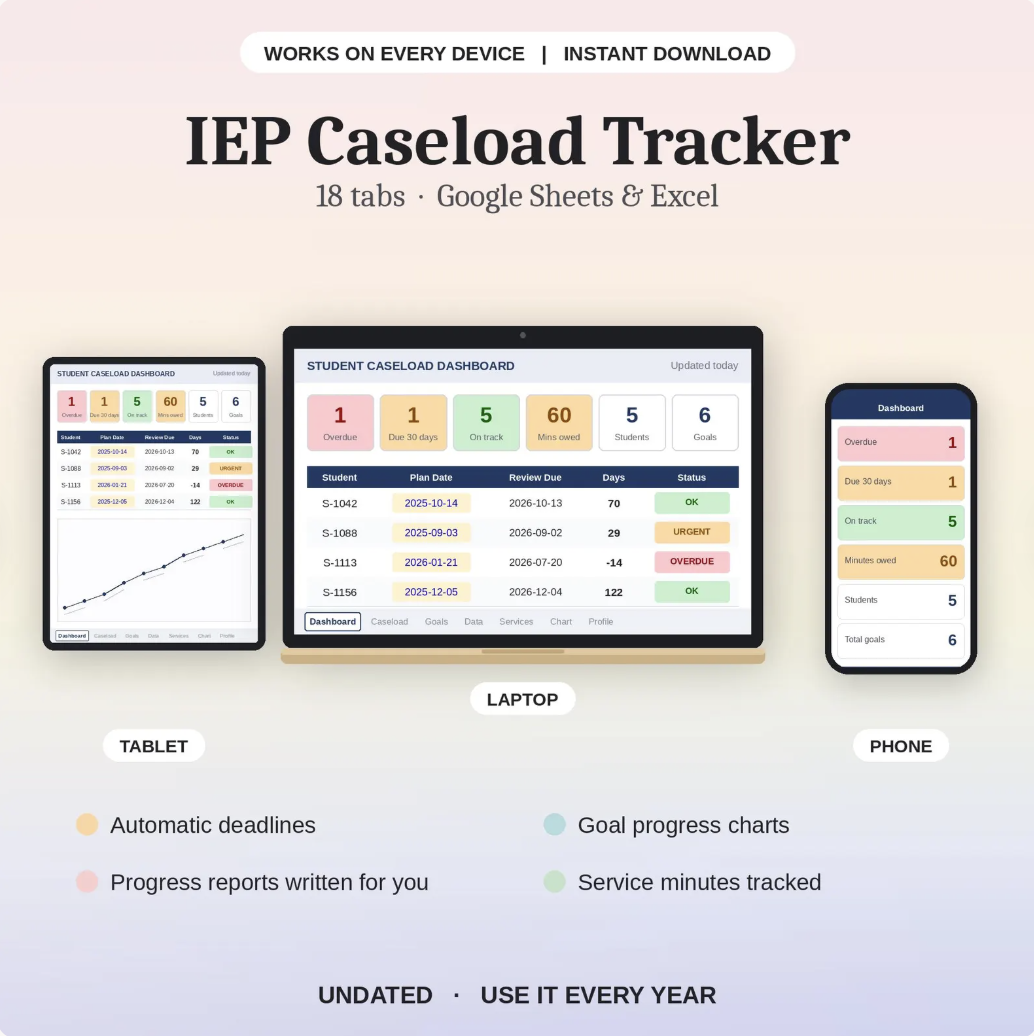
Here are some great options from fellow teacher-authors who have made amazing data collection systems (both digital and printable.
Step 3: Create "Cheat Sheets" for General Education Teachers
Collaboration is a huge part of your job. General education teachers manage 25+ kids in a room, and they need to know exactly how to support the students on their shared caseload.
Take the accommodations you highlighted in Step 1 and condense them into a one-page, easy-to-read document for each general education teacher you co-teach with. Handing them a quick “IEP At-A-Glance” cheat sheet before the first day of school is the absolute best way to build a strong, collaborative relationship. They will love you for it.
I’ve already made a few styles for you! Check out my 3 collections: Coastal Calm, Desert Boho, and Sunny Horizon. Beautiful colors to color-code your caseload by grade level or general education teacher. Or just choose your favorite colors! Check them out here:
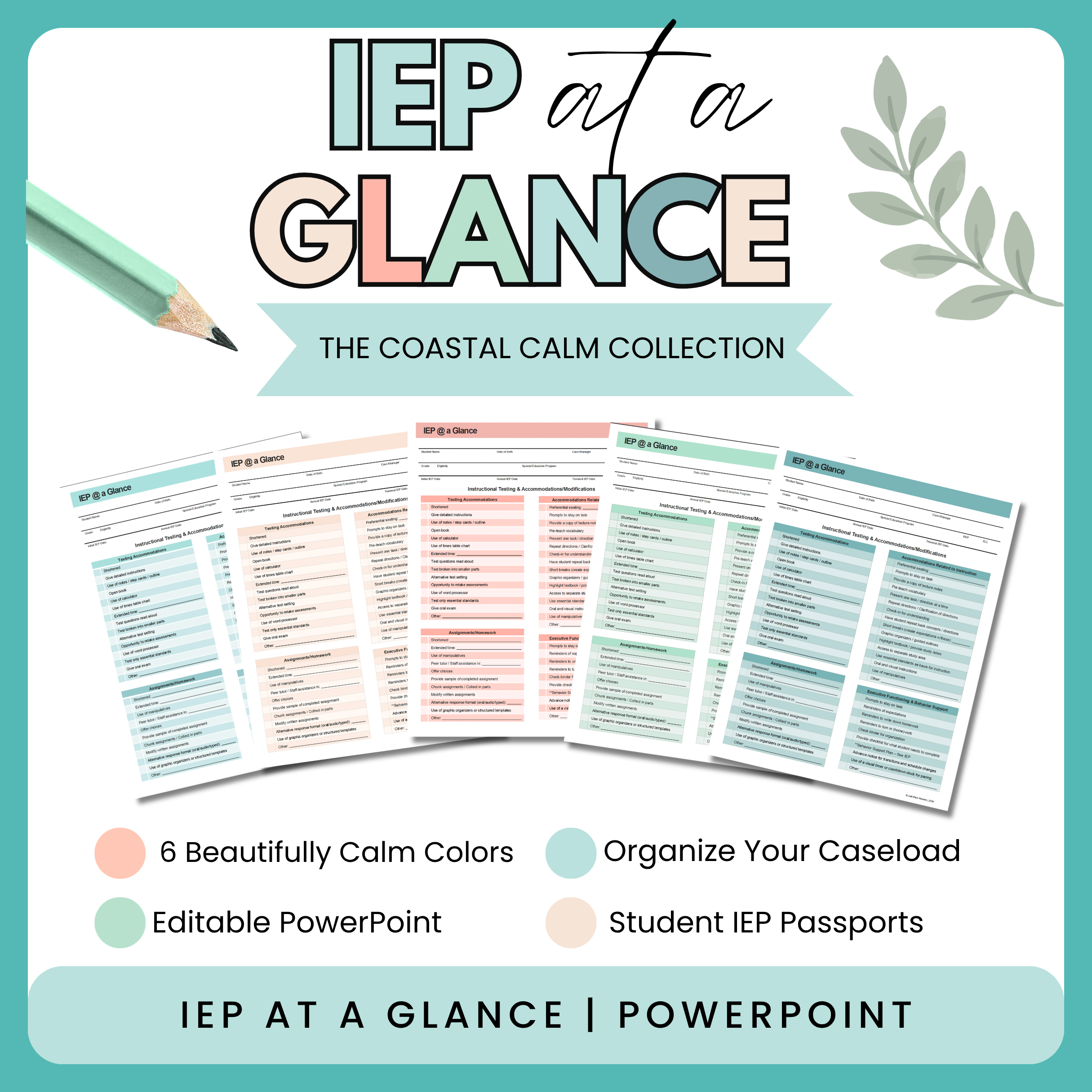


Editable IEP at a Glance | Editable IEP Passport | Editable IEP Snapshot | Sunny
Step 4: Draft Your Master IEP Meeting Calendar
IEP meetings will sneak up on you faster than you think. Open up your district’s digital calendar (or your favorite teacher planner) and plot out every single annual review and re-evaluation date for the entire school year right now.
Work backward: Set calendar reminders for yourself 30 days and 15 days before the meeting is due. This ensures you have plenty of time to send home the prior written notice and gather input from the general education team without rushing.
Block out time: If your school administration allows it, block out specific days or times of the week dedicated strictly to holding meetings.
Step 5: Standardize Your Meeting Prep (Stop Reinventing the Wheel)
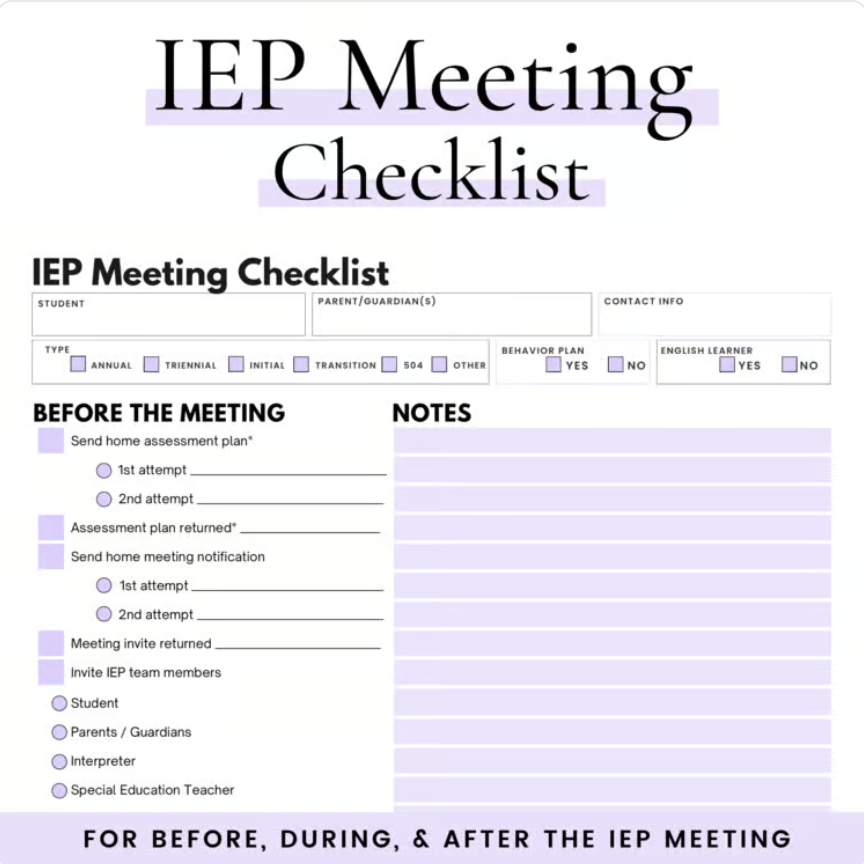
Going into your first IEP meeting unprepared is a common pitfall. To keep the team focused and help parents feel confident in your expertise, use a standardized IEP Meeting Checklist.
When you use the exact same forms for every meeting, you never forget a step, a signature, or a legally required component. Meaningful differentiation isn't about more work; it's about better access. Streamlined systems are the key to unlocking that access.
Stop Spending Your Weekends Modifying
If that free IEP Caseload Planning Page helped you feel a little more organized, you do not have to create the rest of your systems from scratch.
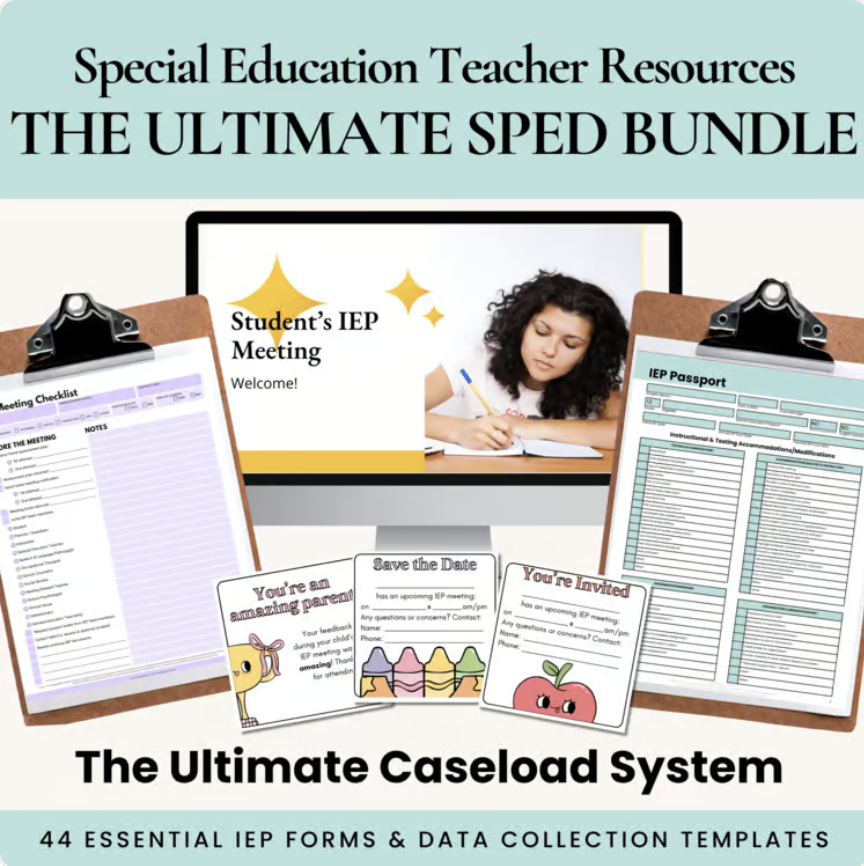
I actually put together a complete, done-for-you Special Education Teacher Bundle | IEP Meeting Forms & Data Collection Templates to cover every meeting and data need for the entire school year.
It includes everything from meeting checklists to informal assessments. Visit my Teachers Pay Teachers Store so you can grab the full toolkit, automate your paperwork, and actually enjoy your evenings and weekends this year!
Quick FAQs: First-Year Special Education Teachers
How do I manage my special education caseload? The most effective way to manage a special education caseload is by using standardized, repeatable systems. Use a master calendar for upcoming deadlines, create an “IEP At-a-Glance” binder for daily reference, and prep ready-to-use data sheets to track student goals without scrambling.
What are the best resources for new special education teachers? First-year special education resources for teachers should always include a comprehensive data collection system, a master IEP meeting calendar, clear visual classroom schedules, and a solid IEP meeting checklist. Having these operational tools printed and ready before day one prevents mid-year burnout and ensures you can collect accurate baseline data immediately. Bonus points if you use IEP Meeting Presentations and Student-Led IEP Meeting Presentations in your meetings to include all team members in the process!
Have a fantastic start to your school year. Remember: you are the advocate, the educator, and the safe space your students need. You’ve got this!
Found this post helpful? Share this article with other educators! If you liked this post, pin it to Pinterest.👇
Let’s chat! What is your #1 strategy or tool for keeping your special education caseload and IEP deadlines organized?
💬 Drop a comment below and share your favorite system—we are all in this together! 📋