Special Education Data Tracking: Mistakes & Quick Fixes
Common Data Tracking Mistakes (And How to Fix Them Before Progress Reports Are Due)
It’s that time of the quarter. The district sends out the email reminding you that IEP progress reports are due next week. You open your data binder, take a deep breath, and realize… your data for the last month consists of three random sticky notes, a tally mark on a napkin, and your own sheer willpower.
We’ve all been there.
Special education data tracking is one of the hardest parts of the job because you are managing so many moving pieces at once. When you are putting out behavioral fires, differentiating instruction, and collaborating with general education teachers, remembering to grab your clipboard can feel impossible.
But you don’t have to scramble every time progress reports roll around. If your current data collection system isn’t working, you are likely making one of these common special education data tracking mistakes. Here is how to fix them right now.
Mistake #1: The "Sticky Note" System
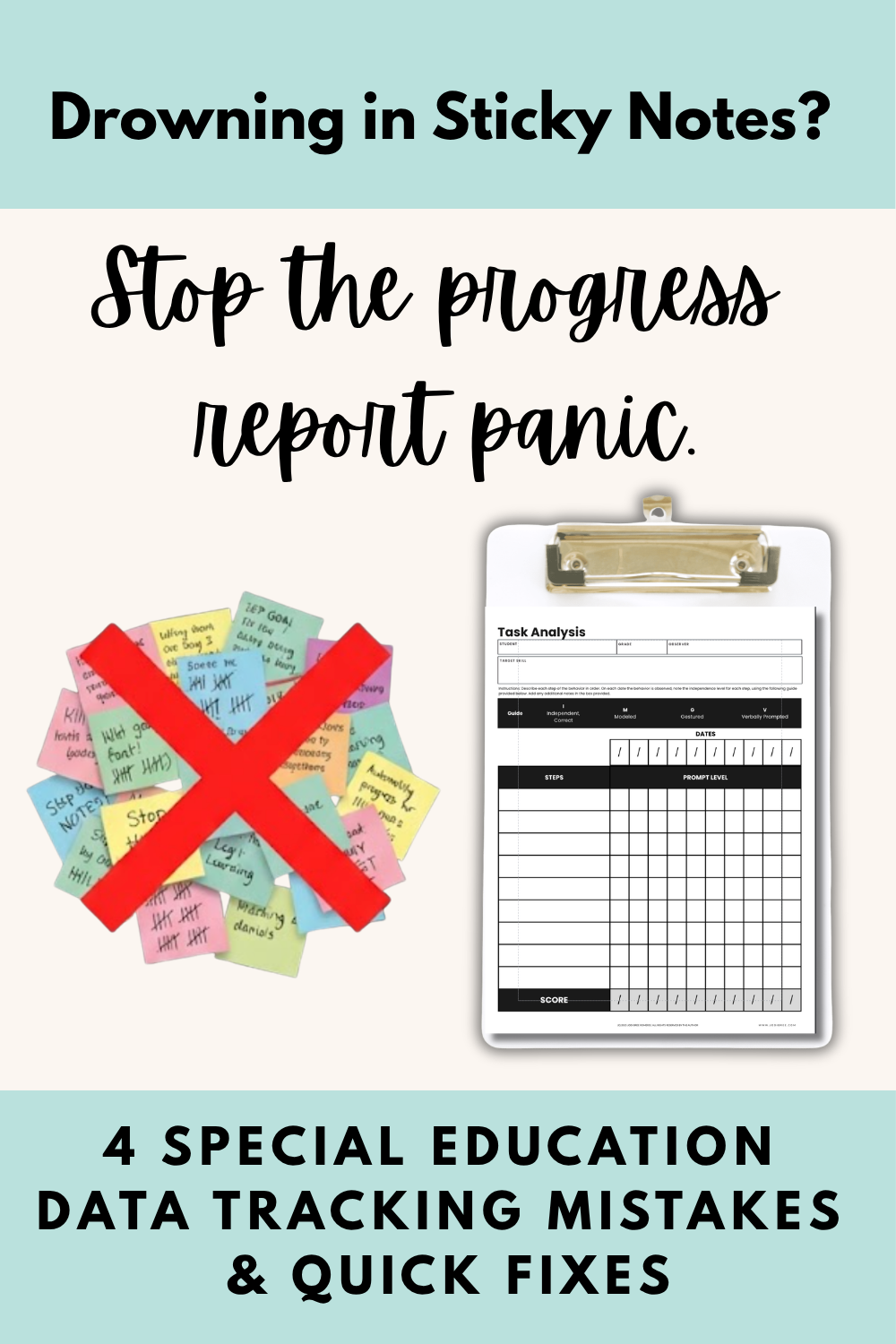
Writing data on whatever piece of paper is closest to you is a recipe for disaster. It gets lost, accidentally thrown away, or by the time you sit down to write progress reports, you can’t remember what "3/5 prompts" actually meant.
The Fix: You need standardized, grab-and-go data sheets stationed in "zones" around your room. I keep a clipboard by the independent work station, one at my small group table, and one by the door.
Pro-Tip: If you need paper data sheets, I highly recommend checking out:
Data Collection Sheets for Special Education IEP Goals EDITABLE by Wendy Works on Teachers Pay Teachers.

Or, if you are looking for a digital data-tracking system, try IEP Data Collection Digital Trackers - Student Data Tracking Sheets - Special Ed by Beltran’s Behavior Basics on Teachers Pay Teachers.
Mistake #2: Vague or Subjective Behavior Data
Writing down "Luis had a bad day" or "Tamara was non-compliant" gives you exactly zero actionable data for an IEP meeting. Subjective data won’t hold up if you need to request a Functional Behavior Assessment (FBA) or defend a student’s progress to a parent.
The Fix: Track objective behavior. What happened right before? What did the behavior actually look like? What happened after?
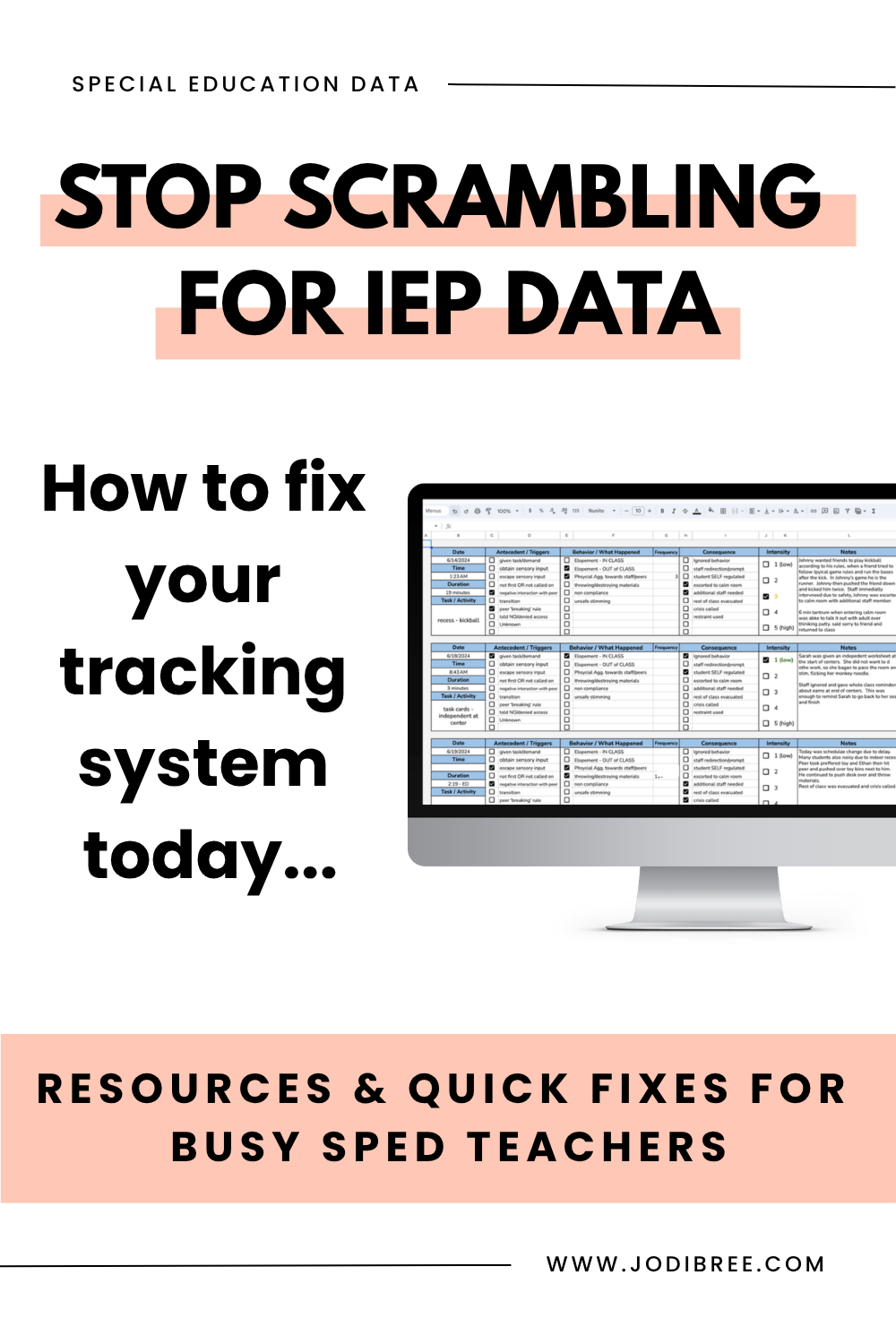
If this sounds time-consuming, it doesn’t have to be. I designed this ABC Behavior Chart specifically for busy SPED teachers. They allow you to quickly track data about the Antecedent, Behavior, and Consequence (ABC data) in seconds so that you can get back to teaching. If you prefer a digital tracker, check out fellow teacher-author Sheets That Teach: ABC Data Tracker | Editable Behavior Data Sheet for Special Ed.
Mistake #3: Doing It All Yourself
If you are the only person in the room taking data, you will burn out. Many teachers feel guilty about asking their paraprofessionals to collect data, or worry that the data won’t be collected correctly.
The Fix: Empower your paraprofessionals! They are your greatest asset. The key is to give them simplified, foolproof data sheets that don’t require them to write paragraphs.
Resource Shoutout: Beltran’s Behavior Basics offers an incredible Special Education Paraprofessional Binder & IEP Behavior Data Collection Sheets that include simple data-collection sheets! Highly recommend checking it out!
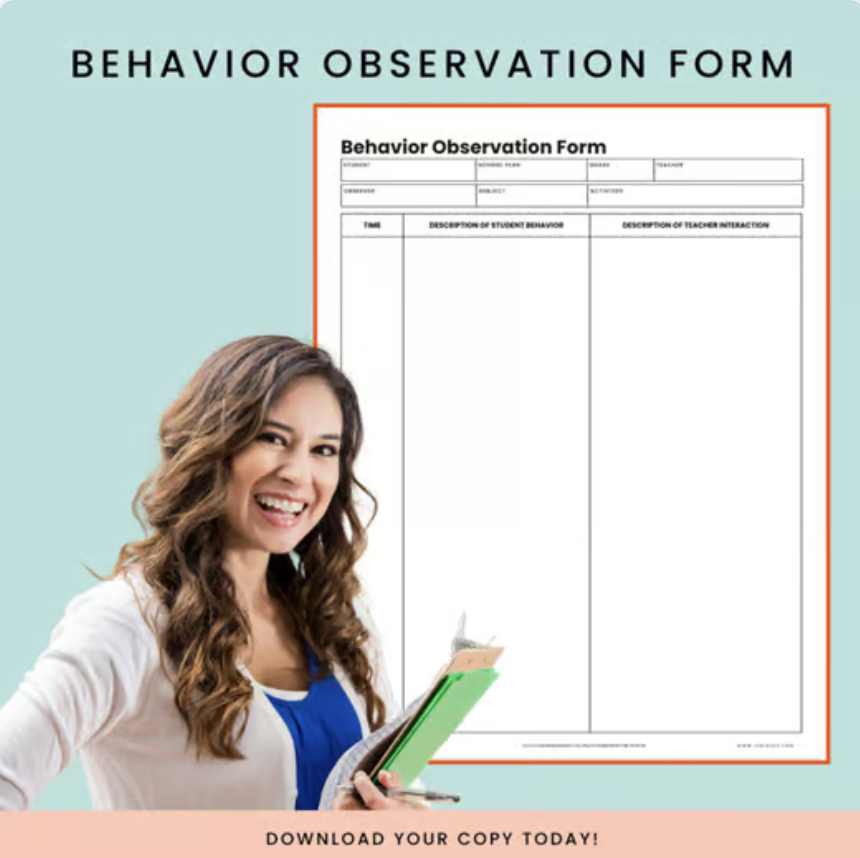
Click Here for a simple, FREE Behavior Observation Log that paraprofessionals can use to record their observations.
Mistake #4: Tracking the Standard, Not the Goal
Sometimes, we get so caught up in the general education curriculum that we accidentally track a student’s grade on a math worksheet instead of their specific IEP goal (like “adding single-digit numbers with visual supports”).
The Fix: Look at your students’ IEPs today. See what is the specific criteria for mastery. Are they measured by accuracy, frequency, or duration? Make sure the data sheets you use actually match the specific wording of the IEP goal.
Stop the Progress Report Panic
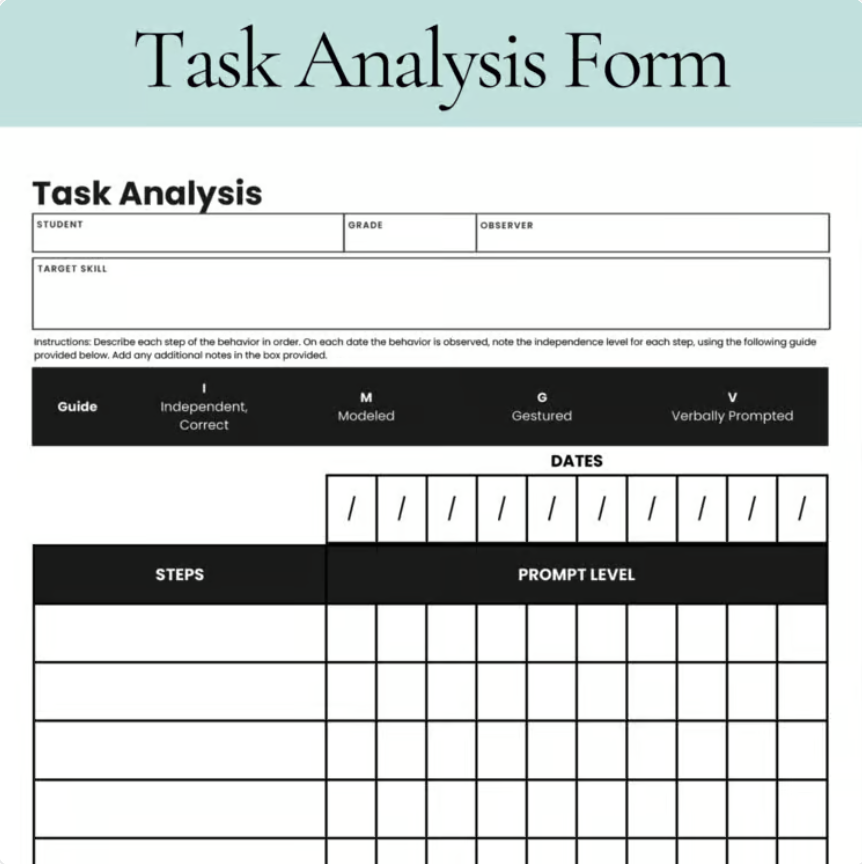
You are an amazing advocate for your students, and your data should reflect the hard work you are doing every single day. By ditching the sticky notes and setting up intentional, targeted data sheets like my Task Analysis Data Collection | 10-Session IEP Progress Tracker | Data Template, your next progress report season will be a breeze. You’ve got this!
Quick FAQs: IEP Data Collection
How often should special education teachers collect data? Best practice is to track special education data weekly or bi-weekly for every IEP goal. Although behavioral goals may require daily data collection. Consistent data collection prevents a mad dash before progress reports are due and makes sure you have an accurate picture of student growth.
What is the best way to track behavior data for an IEP? The most effective way to track behavior is by using objective data collection: ABC (Antecedent, Behavior, Consequence) data sheets, scatterplots, task analysis, or frequency tally charts. Be sure to avoid subjective emotional language; focus instead on observable, measurable actions.
You no longer have to dread progress report season or feel stressed when IEP progress reports are due. By ditching random sticky notes/printer pages and implementing standardized, objective data-collection systems, you can protect your time and feel completely confident sending home progress reports, which helps you write meaningful and measurable IEPs.
Let’s Chat!
What is your favorite strategy or resource for keeping your IEP data organized when progress reports are due? Drop a comment below and share your favorite resource below! 📋💬