The Monthly SpEd Snapshot: Navigating May Authentically
A monthly dose of inspiration, practical classroom support, and fresh ideas for teachers and parents.
Welcome to this month’s SpEd Snapshot! May brings a unique mix of excitement and end-of-year exhaustion. If you are trying to find meaningful, authentic ways to recognize Asian American and Pacific Islander (AAPI) Heritage Month in your classroom without burning out, here is your quick breakdown for the month:
Challenge of the Month: Audit your May read-alouds for "Own Voices" representation and Pacific Islander inclusion. Finding authentic AAPI books can be tricky—many standard lists lean heavily on historical folklore or overlook South Asian, Southeast Asian, and Pacific Islander voices entirely. Your challenge this month is to swap out one generic springtime read for an authentic, contemporary book written by an AAPI author that reflects lived experiences.
Term of the Month: Own Voices — Books written and illustrated by creators who share the same cultural background or lived experience as their characters, bringing genuine, insider perspective rather than an outsider's guess.
“Quote of the Month: When you give a child a book that truly reflects their lived experience, you aren’t just teaching them to read—you are telling them that their story matters.”
Support of the Month: Visual Graphic Organizers & Story Maps — Simple, visual layouts that help kids keep track of characters, settings, and plot order so they can focus on the heart of the story instead of getting bogged down by dense text.
Strategy of the Month: Do a 10-Minute "Representation Audit" of Your Display Shelf. Before you leave on Friday, look at the front-facing books in your reading corner or morning meeting area. Swap out standard spring titles for at least two AAPI books that represent different cultures (for example, pairing a Southeast Asian picture book with a Pacific Islander story). Giving students an immediate visual mirror builds a welcoming environment right where they learn.

Find AAPI Heritage Month Books for Every Learner
Finding meaningful books for Asian American and Pacific Islander (AAPI) Heritage Month doesn't have to take hours of searching for the right titles. I've put together a collection of 15 AAPI Heritage Month books for students in grades K–12, including picture books, early chapter books, middle-grade novels, graphic novels, and books for teens.
Grab these picks for your morning read-alouds, small-group lessons, or independent reading bins. Asian American, Native Hawaiian, and Pacific Islander authors and illustrators created every title on this list, so you'll find stories for all ages, interests, and reading levels.
Meaningful Stories That All Students Can Enjoy
We all want our students to connect with the books they read, learn about different perspectives, and see a wide variety of lived experiences represented on our shelves. But finding Asian American and Pacific Islander children's books that are culturally authentic, age-appropriate, and genuinely engaging for students with different learning needs isn't always easy. Standard reading lists for May often lean heavily on historical folklore or inadvertently overlook the contemporary, everyday experiences of AAPI kids.
Hopefully, this curated list takes the guesswork out of your May reading plans, giving you the exact read-alouds and novel studies you need to build a truly inclusive, welcoming classroom environment!
“Now more than ever, the world needs our stories.”
15 Asian American and Pacific Islander (AAPI) Heritage Month Books for Kids & Teens (K–12)
Explore 15 thoughtfully selected books for elementary, middle, and high school students. From engaging picture books to graphic novels, novels in verse, and young adult reads, this collection offers opportunities to explore contemporary AAPI family life, cultural identity, immigration history, and community resilience.
Selection Note:
I prioritized award-winning and critically acclaimed books that feature authentic Own Voices representation by Asian American, Native Hawaiian, and Pacific Islander authors and illustrators. Selections include titles recognized by respected literary honors such as the Caldecott Medal, the Newbery Medal, and the Asian/Pacific American Award for Literature (APALA), presented by the Asian/Pacific American Librarians Association. The collection features a balanced mix of picture books, early chapter books, middle-grade novels, graphic novels, and young adult memoirs, highlighting diverse cultures, histories, and experiences from East Asia, South Asia, Southeast Asia, and the Pacific Islands. ***Grade ranges are suggestions, and teachers and homeschooling parents should consider students' individual reading needs, developmental readiness, and maturity levels when choosing titles.
“The food, the clothing, the festivals. Those are easy ways to get to know a culture and maintain a connection to a heritage.”
Picture Books: K–2
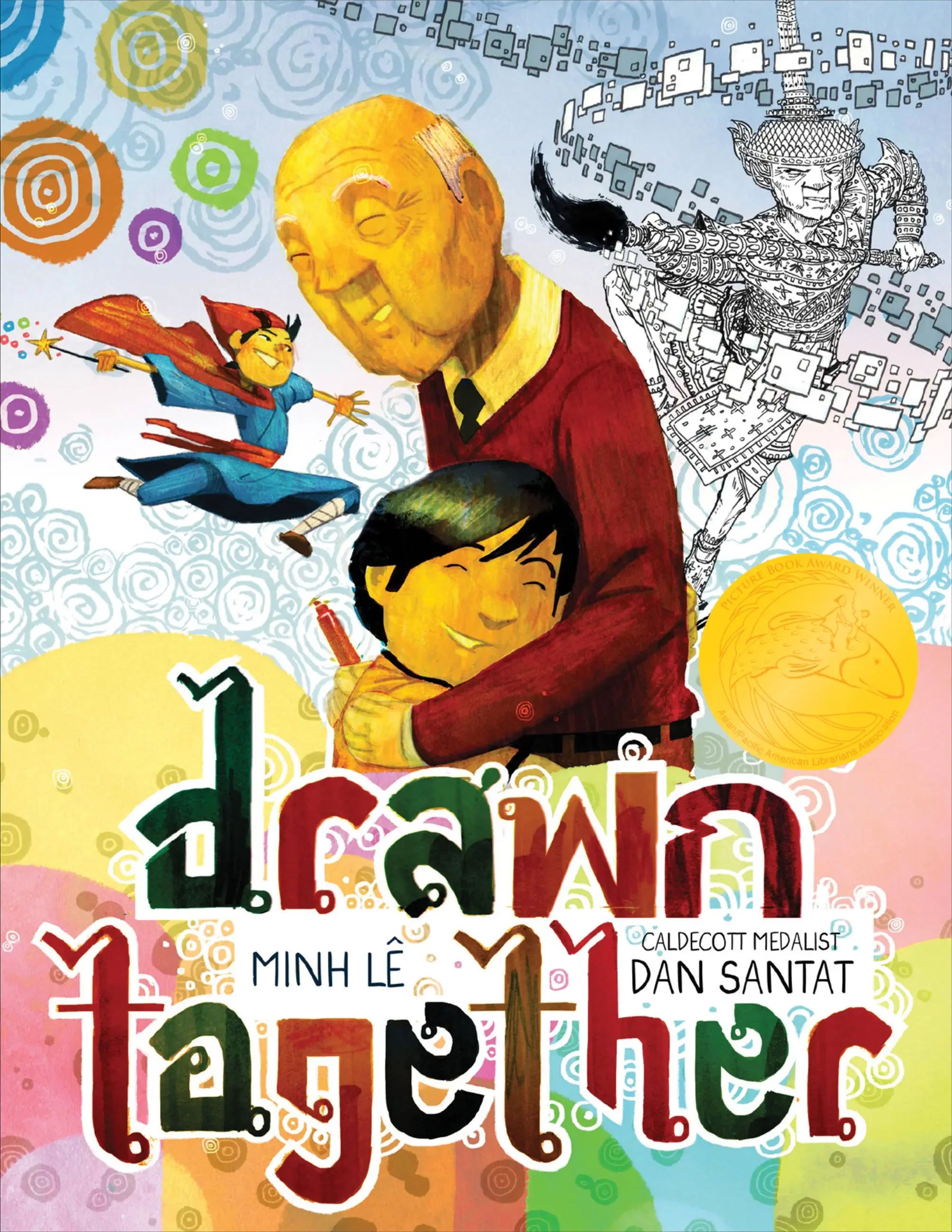
Drawn Together by Minh Lê, illustrated by Dan Santat
Grades: Pre-K–3 | Picture Book
When a young boy visits his Thai grandfather, a language barrier makes it hard for them to connect—until they pull out markers and sketchbooks and discover a shared love of art. Winner of the Asian/Pacific 2019 American Award for Literature - Picture Book, this story celebrates intergenerational bonds and creative communication.
Try it in class: Have students pair up and create a collaborative drawing without speaking to practice non-verbal communication and visual storytelling.
Accessibility consideration: Because the narrative relies almost entirely on expressive illustrations rather than dense text, non-speaking students, emerging readers, and English learners can follow the entire plot independently.
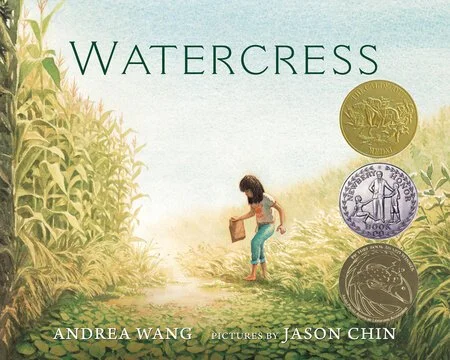
Watercress by Andrea Wang, illustrated by Jason Chin
Grades: K–4 | Picture Book
Embarrassed when her parents stop their car on the side of an Ohio road to gather wild watercress from a ditch, a young girl learns the poignant family history behind the meal.
Winner of the Caldecott Medal, APALA Picture Book Award, 2022 Newbery Honor Book, 2022 Asian/Pacific American Award for Literature — Picture Book Winner, and 2022 Chinese American Librarians Association (CALA) Best Book Award — Children's Fiction, this memoir-inspired story bridges generational gaps.
Try it in class: Connect the story to a social studies or writing lesson where students interview a family member about a meaningful recipe or food tradition.
Accessibility consideration: Each spread features short, manageable chunks of text surrounded by generous open space and rich watercolor details, preventing visual fatigue while giving emerging readers plenty of visual context clues to support comprehension.
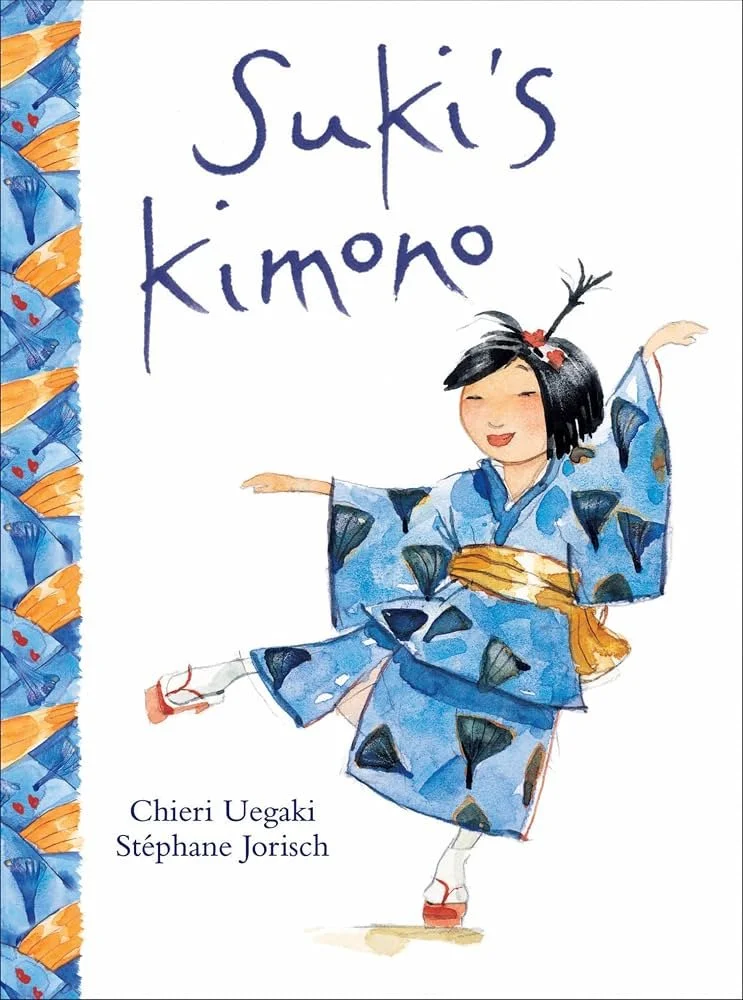
Suki's Kimono by Chieri Uegaki, illustrated by Stéphane Jorisch
Grades: Pre-K–2 | Picture Book
On her first day of first grade, Suki insists on wearing her favorite blue cotton kimono—a gift from her Japanese grandmother—despite her older sisters' warnings that she will look different from everyone else. A 2004 Children’s Book Award Notable Book, this timeless story celebrates cultural pride, confidence, and staying true to yourself.
Try it in class: Invite students to draw or share an item of clothing, accessory, or keepsake that connects them to their family or favorite memories.
Accessibility consideration: A clear, sequential plot centered on a familiar milestone (the first day of school) makes the story concrete and easy for young learners to predict and retell.
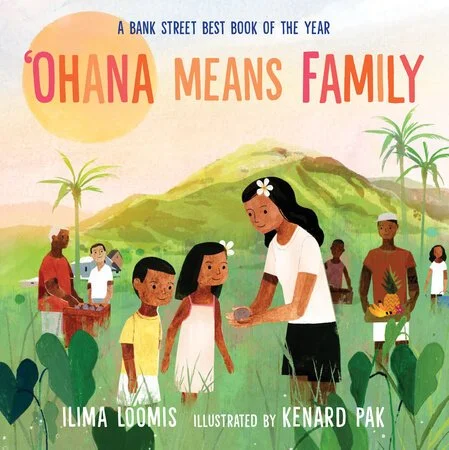
ʻOhana Means Family by Ilima Loomis, illustrated by Kenard Pak
Grades: Pre-K–2 | Picture Book
Set to the cumulative rhythm of "The House That Jack Built," this Kirkus Reviews Best Book of the Year, New York Public Library Best Book of the Year, and Booklist Editors' Choice, follows a Native Hawaiian family as they harvest taro, prepare poi, and gather together for a celebratory lūʻau. The poetic text honors Hawaiian land stewardship, language, and extended family bonds.
Try it in class: Use the cumulative rhyming pattern to practice sequencing story events from start to finish using picture cards or a simple timeline.
Accessibility consideration: The predictable, cumulative repetition builds auditory anticipation and supports early phonemic awareness and memory recall.
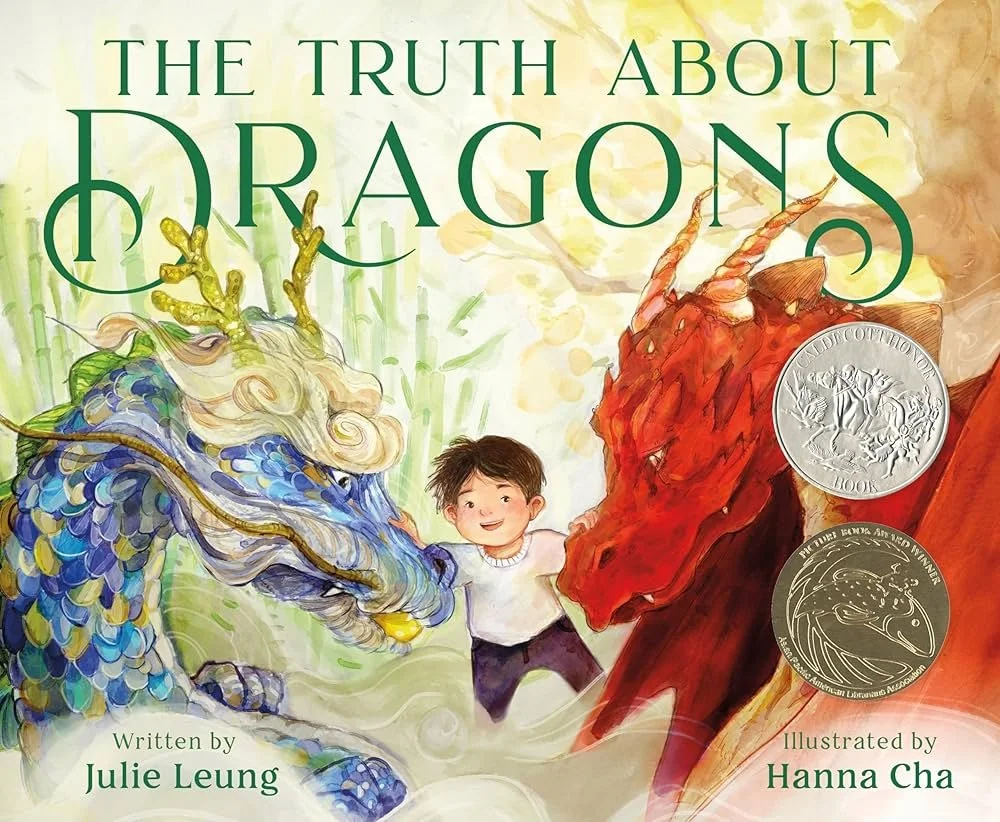
The Truth About Dragons by Julie Leung, illustrated by Hanna Cha
Grades: Pre-K–3 | Picture Book
As a biracial boy prepares for bed, his mother takes him on an imaginative journey to meet two very different dragons—one from the Western woods and one from the Eastern skies—teaching him that he belongs fully to both worlds. This APALA Picture Book Award winner, 2024 Caldecott Honor Book, 2024 APAAL — Picture Book Winner, offers a gentle, affirming look at mixed-heritage identity.
Try it in class: Use a simple Venn diagram to compare and contrast the traits of the two dragons, helping students practice categorizing details from a text.
Accessibility consideration: Distinct visual color palettes for each forest provide clear visual cues that help students track shifts in setting.
“I wanted to write books for and about girls who looked like me because there were little or no books featuring Asian characters when I was growing up.”
Upper Elementary: Grades 2–5
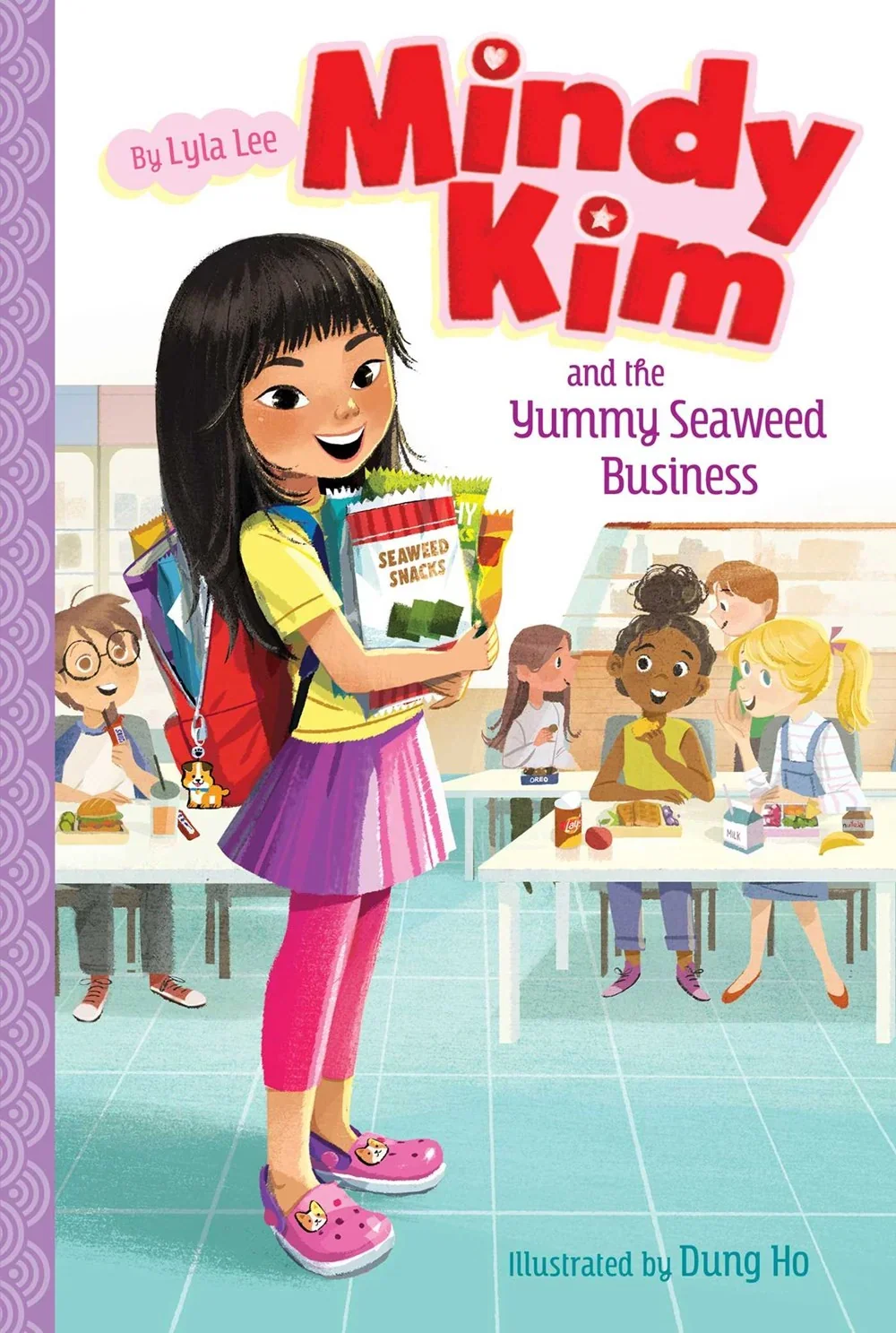
Mindy Kim and the Yummy Seaweed Business by Lyla Lee, illustrated by Dung Ho
Grades: 1–4 | Early Chapter Book
Starting at a new school in California, Korean American seven-year-old Mindy Kim just wants to fit in—and when classmates love her roasted seaweed snack, she launches a recess business to save up for a puppy. This 2020 Kirkus Reviews Best Middle Grade Books of the Year and Cybils Award finalist blends humor, entrepreneurship, and cultural pride.
Try it in class: Tie the story into an elementary math or economics unit by having students calculate basic supply costs and pricing for a hypothetical classroom snack stand.
Accessibility consideration: Large font, generous white space, and frequent illustrations support transition readers as they build chapter-book stamina.
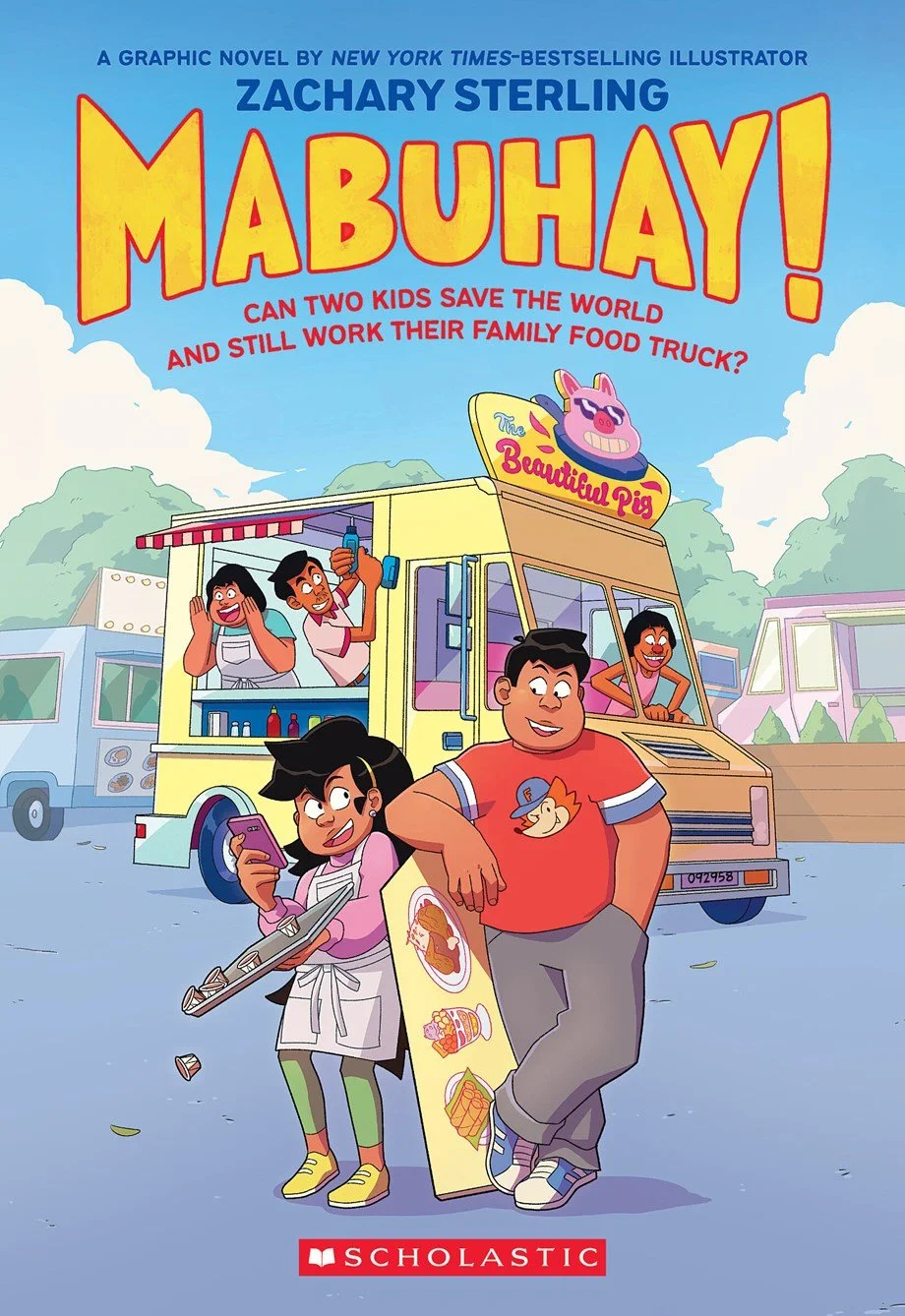
Grades: 3–5 | Graphic Novel
Filipino American siblings JJ and Althea spend their days helping out at their family's bustling food truck and trying to fit in at school—until the ancient Filipino folklore creatures their mother warned them about start appearing in real life. The 2025 APALA Children’s Literature Honor Book and 2024 Eisner Award nominee, this energetic graphic novel blends everyday family responsibility with Filipino mythology and cultural pride.
Try it in class: Have students research one mythological creature or folktale from their own family heritage or culture of interest, then create a one-page "field guide" profile with a drawing and three key traits.
Accessibility consideration: Expressive artwork, dynamic action panels, and clear speech bubbles provide strong visual context clues—supporting reading comprehension and reducing text fatigue for visual learners and reluctant readers.
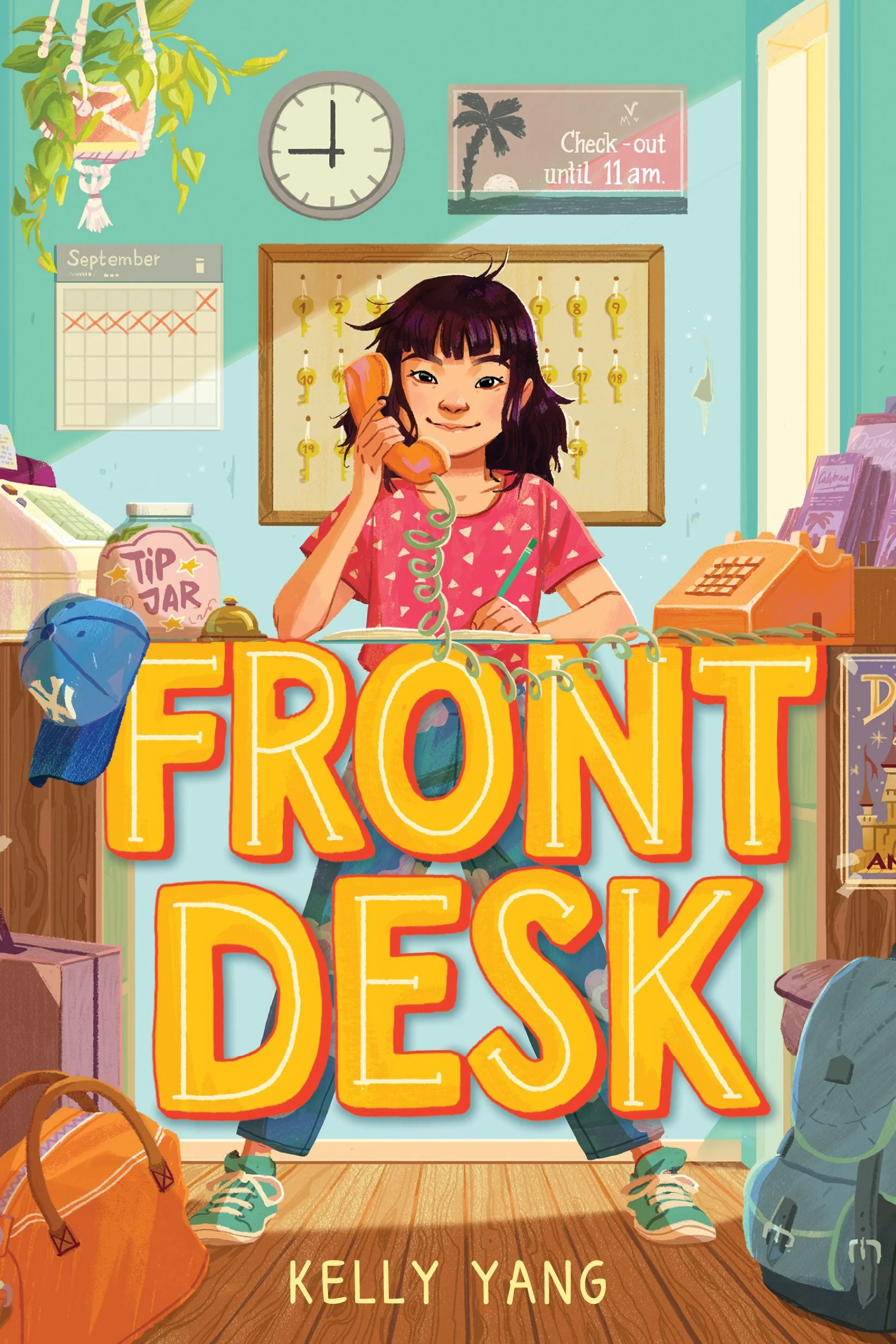
Grades: 3–7 | Middle-Grade Novel
Ten-year-old Mia Tang manages the front desk of the Calivista Motel. Meanwhile, her immigrant parents clean the rooms, hiding fellow immigrants from the greedy motel owner, while Mia chases her dream of becoming a writer.
Winner of the 2019 APALA Children's Literature Award, the 2018 Parents' Choice Gold Medal — Fiction, the 2019 Chinese American Librarians Association (CALA) Best Book Award, and 2018 Goodreads Choice Awards — Semi-Finalist, Best Middle Grade Fiction, this fast-paced novel tackles systemic fairness and resilience.
Try it in class: Have students write persuasive letters advocating for a positive change in their school or local community, mirroring Mia's use of writing to solve problems.
Accessibility consideration: Short, episodic chapters create natural stopping points for students with limited reading endurance or working memory challenges.
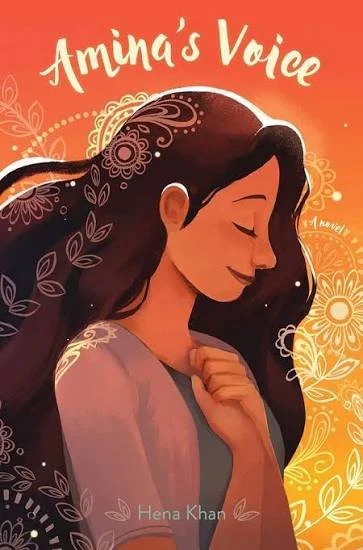
Grades: 4–7 | Middle-Grade Novel
This ALA Notable Children's Book and 2017 Goodreads Choice Awards nominee — Readers' Favorite Middle Grade & Children's, and South Asia Book Award — Highly Commended- follows Pakistani American middle schooler Amina, who loves singing, but her intense stage fright and shifting friendships make it hard to share her voice—especially after her family's local mosque is vandalized. This heartfelt novel explores cultural identity, religious community, and the courage it takes to speak up.
Try it in class: Have students create a two-column "Before and After" character chart tracking how Amina expresses herself at the beginning of the novel versus the end, then write a short paragraph about a time they found the courage to share their own voice or talent.
Accessibility consideration: The protagonist’s internal monologue explicitly models anxiety symptoms and coping mechanisms, supporting social-emotional learning goals.
“Every kid needs mirror books, and every kid needs window books. A mirror book is a book that reflects your own experience back to you... Window books give you a glimpse into the lives of people who, at least on the surface, seem very different from you.”
Middle School: Grades 4–8
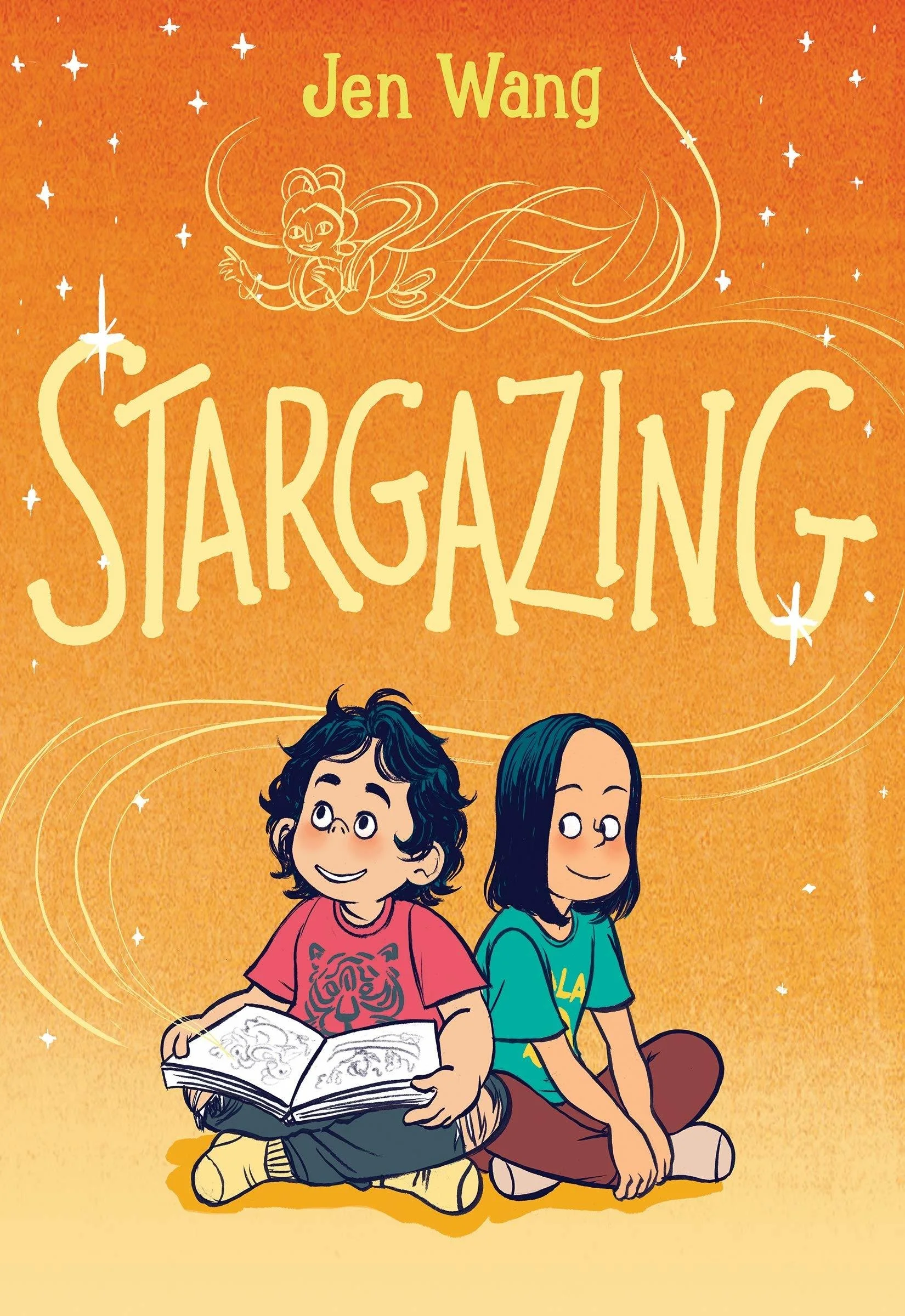
Grades: 4–8 | Graphic Novel
Studious, rule-following Christine and free-spirited, artistic Moon seem like opposites living in the same Chinese American suburb, until a sudden medical crisis tests their friendship. Winner of the 2020 APALA Children's Literature Award, 2020 Harvey Award nominee — Best Children or Young Adult Book, and 2020 YALSA Great Graphic Novels for Teens selection, this graphic novel handles chronic illness, medical differences, and empathy with warmth.
Try it in class: Analyze how the author uses panel size, facial expressions, and color shifts to convey emotion during scenes where characters struggle to explain their feelings aloud.
Accessibility consideration: The graphic novel format provides continuous visual context clues, reducing decoding fatigue and supporting comprehension for visual learners.
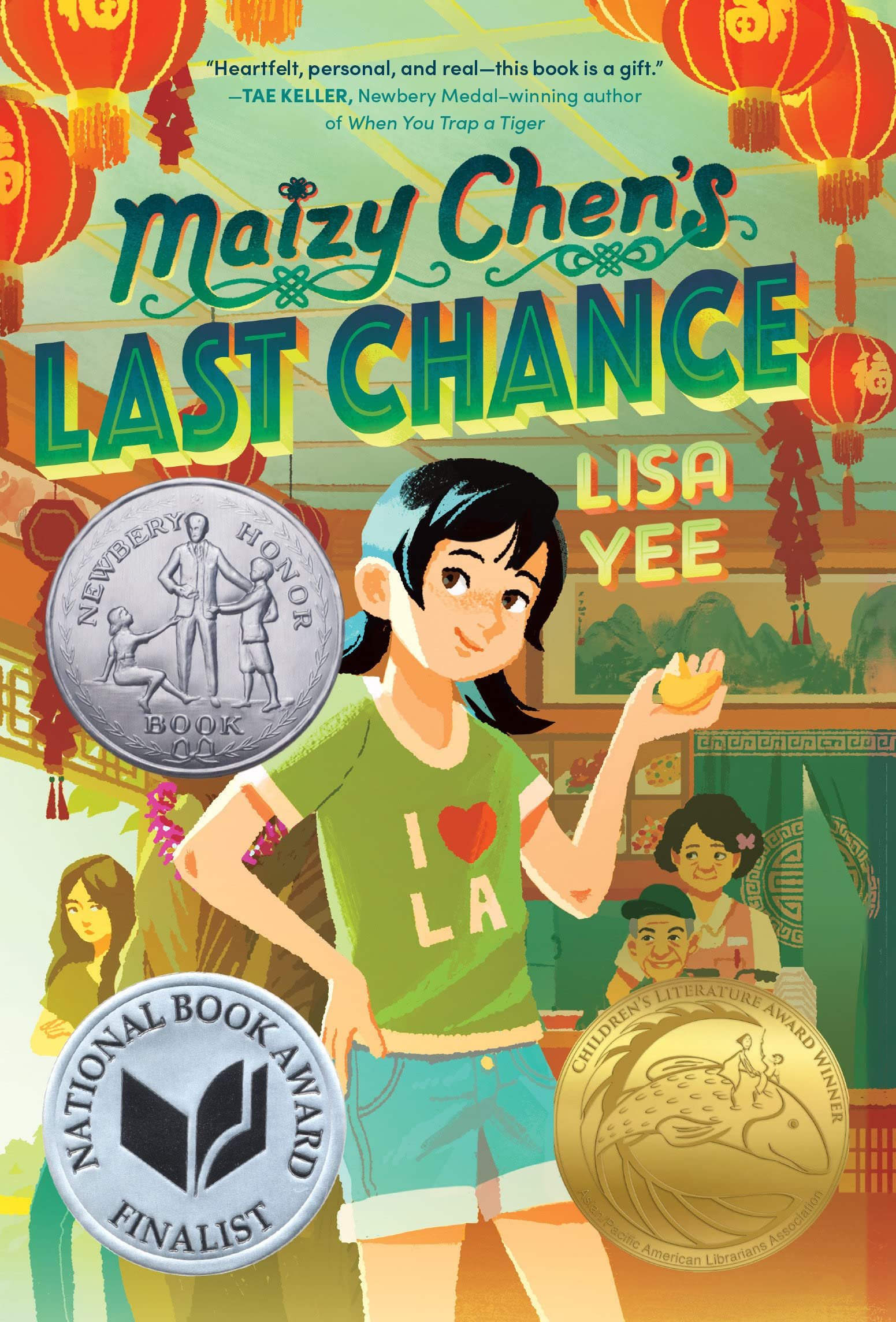
Maizy Chen's Last Chance by Lisa Yee
Grades: 4–8 | Middle-Grade
Novel
Spending the summer in Last Chance, Minnesota, to help with her grandfather's declining health, Maizy uncovers old family photographs and investigates the hidden history of Chinese immigrants who built the town's Golden Palace Restaurant. This Newbery Honor, 2022 National Book Award Finalist, 2023 APALA Award - Children’s Literature Winner, and 2023 Chinese American Librarians Association (CALA) Best Book Award, weaves mystery with historical truth.
Try it in class: Have students research one local historical landmark or immigrant community contribution in their own town and present a short visual timeline.
Accessibility consideration: The linear scavenger-hunt plot structure maintains high engagement and pairs smoothly with the audiobook edition for auditory learners.
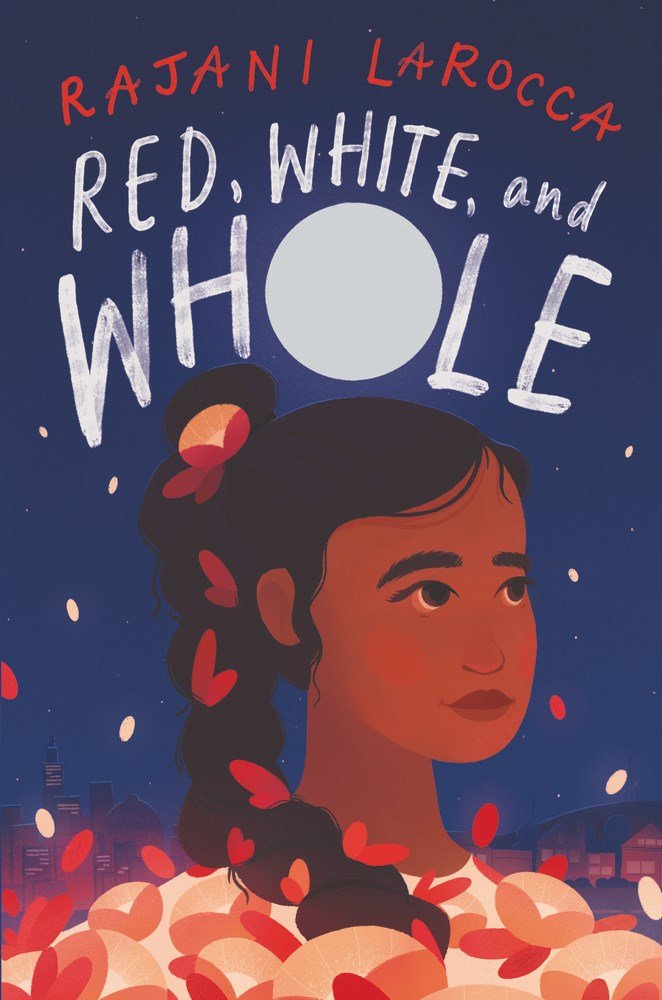
Red, White, and Whole by Rajani LaRocca
Grades: 5–8 | Novel in Verse
Thirteen-year-old Reha feels torn between her Indian American home life and her American school friends—until her mother is diagnosed with leukemia, turning Reha's world upside down. A Newbery Honor, Walter Dean Myers Award winner, and 2021 Goodreads Choice Awards nominee — Readers' Favorite Middle Grade & Children's- this poignant novel explores grief, family duty, and hope.
Try it in class: Examine how poetic line breaks and white space reflect Reha's emotional state, then invite students to write a short free-verse poem about a moment of change.
Accessibility consideration: The novel-in-verse format eliminates dense blocks of text, reducing visual overstimulation while delivering grade-level emotional depth.
“Every immigrant story is different, but it’s also universal.”
High School: Grades 7–12
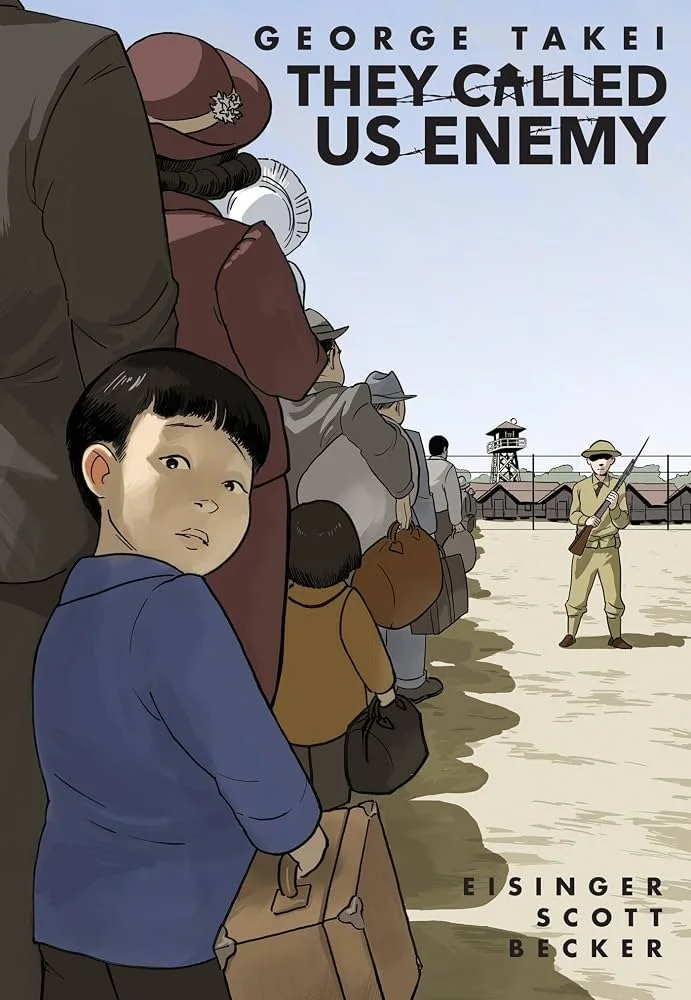
Grades: 7–12 | Graphic Memoir
Actor and activist George Takei recounts his childhood spent behind barbed wire in American internment camps during World War II after his Japanese American family was forcibly removed from their home. Winner of the 2020 APALA Young Adult Literature Award, 2020 Eisner Award — Best Reality-Based Work Winner, 2020 American Book Award — Winner, and
2019 Goodreads Choice Awards nominee — Readers' Favorite Graphic Novels & Comics, this graphic memoir connects wartime history to modern civil rights.
Try it in class: Pair excerpts from the memoir with primary-source historical photographs or constitutional documents to analyze civil liberties during wartime.
Accessibility consideration: Sequential black-and-white artwork anchors historical dates and political events in concrete human experiences, making complex history accessible across reading levels.
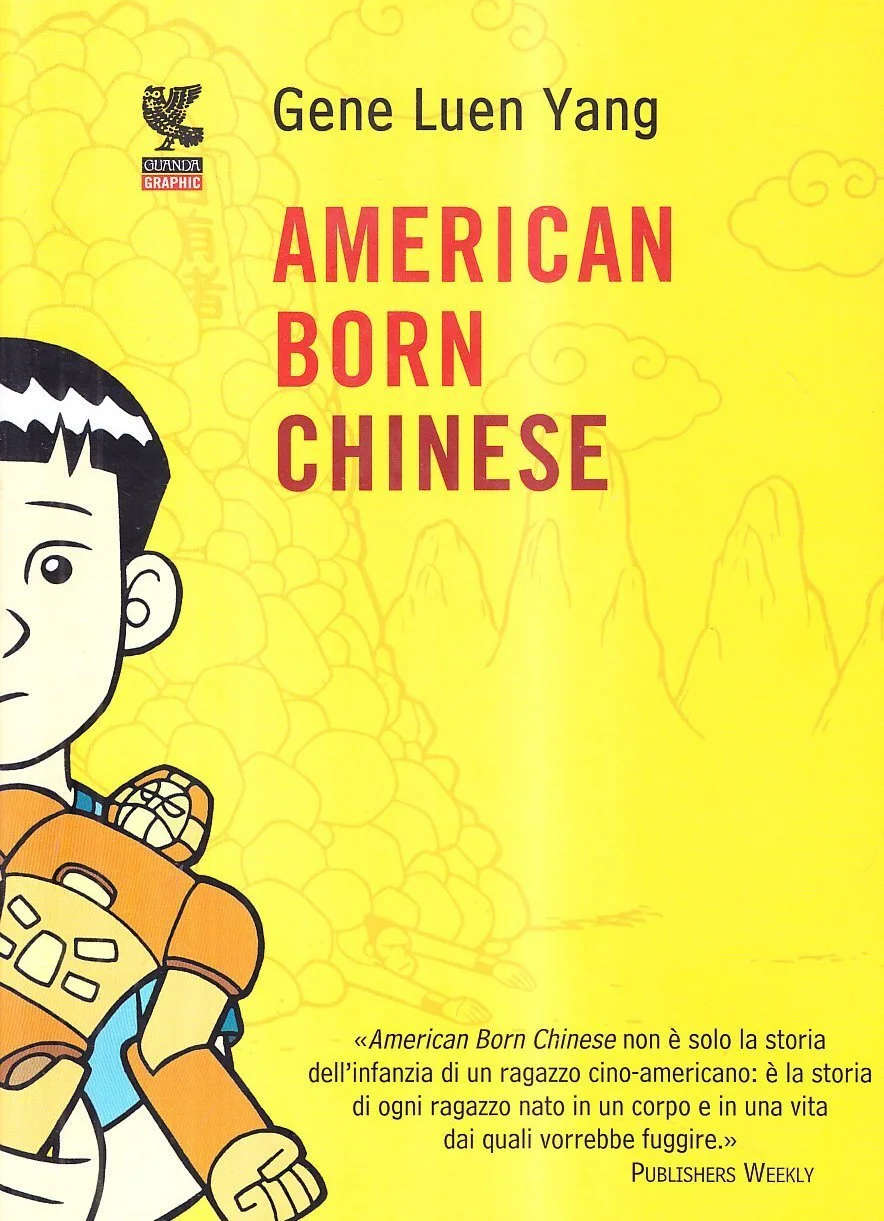
American Born Chinese by Gene Luen Yang
Grades: 7–12 | Graphic Novel
Three seemingly unrelated tales—a Chinese American teenager trying to fit in at a new school, the legendary Monkey King, and a painful sitcom stereotype—weave together in a surprising exploration of cultural identity and self-acceptance. The first graphic novel nominated for a National Book Award (a 2006 National Book Award finalist -Young People’s Literature) and a Michael L. Printz Award winner, and 2007 Eisner Award — Best Graphic Album Winner, this modern classic resonates deeply with teens.
Try it in class: Have students map how the three storylines intersect by the end of the book, discussing how Yang uses visual motifs and folktale parallels to explore identity.
Accessibility consideration: Distinct visual styling and clear color-coding for each storyline help students track multiple narratives without losing comprehension.
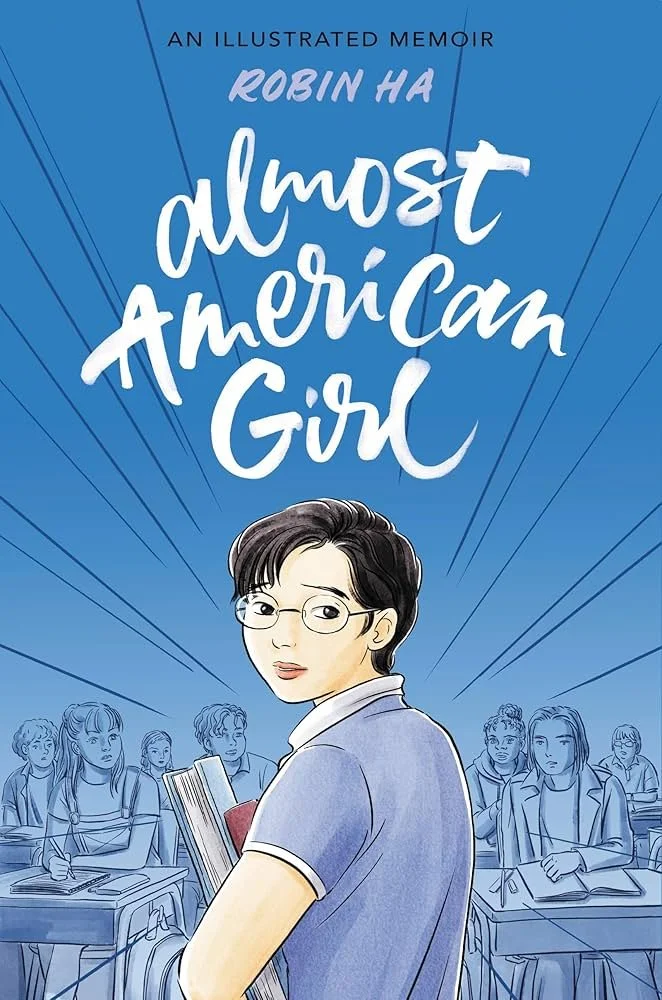
Almost American Girl by Robin Ha
Grades: 7–12 | Graphic Memoir
When a short trip from Seoul, South Korea, to Huntsville, Alabama, becomes a permanent move after her mother remarries, teenager Robin suddenly finds herself at a new school where she doesn't speak the language—until a comic-drawing class helps her find her voice. A Walter Dean Myers Honor Book and YALSA Great Graphic Novel for Teens, and a 2020 Goodreads Choice Awards nominee — Readers' Favorite Graphic Novels & Comics, this memoir is heartfelt, humorous, and deeply relatable.
Try it in class: Have students create a two-page visual memoir spread illustrating a major life transition or moment when they felt like an outsider—and what helped them feel at home.
Accessibility consideration: The full-color graphic novel format provides continuous visual context clues and expressive artwork, reducing text fatigue and making complex cross-cultural adjustment accessible across all high school reading levels.
Teaching with AAPI Heritage Books: Resources for Educators
“In an educational atmosphere that continues to struggle with the needs of both teachers and students of color but tends to overlook the experiences of Asian Americans, I believe this growing population deserves space to express their voices and should have opportunities to see their [histories reflected].”
Building a truly inclusive classroom library doesn't mean doing all the heavy lifting alone. Here are a few of my favorite trusted resources to pair with these books all month long:
Best For: K–8 teachers, reading specialists, and homeschooling parents looking for practical lesson frameworks and book pairings.
Why It’s Great: Written by three Asian American teacher-educators, this approachable guide walks you through moving past surface-level "food and festival" lessons to teach authentic AAPI history and contemporary stories using children's literature.
The Asian American Education Project (AAEdu)
Best For: K–12 History, Social Studies, and ELA lesson plans.
Why It’s Great: Co-founded by educators and historians, this site offers over 60 free, standards-aligned lesson plans (complete with primary sources, video clips, and vocabulary lists) covering AAPI history, civil rights, and contemporary culture. It saves teachers from having to build historical context from scratch before reading novels like They Called Us Enemy or Front Desk.
Smithsonian Asian Pacific American Center (APAC) – Learning Lab
Best For: Interactive digital museum collections and K–12 inquiry activities.
Why It’s Great: The Smithsonian APAC Learning Lab provides curated digital collections, interviews with AAPI creators, and cross-curricular teaching guides that make cultural history concrete and engaging for visual learners.
Asian/Pacific American Librarians Association (APALA) – Literature Award Archives & Rubrics
Best For: Ongoing classroom or home library audits and vetting future read-alouds.
Why It’s Great: Beyond their annual award lists, APALA offers free book evaluation rubrics and reading lists organized by age group. It is a reliable, easy-to-use tool to help you confidently vet AAPI books for cultural authenticity and accuracy year-round—making it a huge help with this month's Challenge of the Month!
Social Justice Books (Teaching for Change) – Asian Americans and Pacific Islanders Booklists
Best For: Educators and parents looking for carefully vetted, anti-bias book reviews.
Why It’s Great: Every book on their curated lists is reviewed by educators and cultural experts to ensure it avoids stereotypes, historical inaccuracies, or "tourist" tropes, making it a huge time-saver for building an inclusive home or classroom library.
3 Quick Wins for Making AAPI Heritage Month Read-Alouds More Accessible
The books in this roundup introduce students to rich cultural traditions, family stories, and diverse Asian American and Pacific Islander perspectives. A few simple, low-prep supports can help more students follow along, connect with the characters, and participate meaningfully.
Quick Win 1: Preview Important Words and Concepts
Many of these stories include heritage languages, traditional foods, and historical events that may be unfamiliar to students. Before reading, choose 2–3 words, places, or concepts to introduce. For example, preview foraging and watercress in Watercress, taro and poi in ʻOhana Means Family, or the history of Japanese American incarceration during World War II in They Called Us Enemy. Use photographs, picture cards, maps, or a short, age-appropriate video from a reliable source to give students some background before you begin.
Quick Win 2: Make Stories Easier to Follow
Use the illustrations and visual details in these books to support comprehension. Pause during the wordless spreads in Drawn Together and invite students to describe what they notice, make predictions, or point out how the characters communicate. For graphic novels like Mabuhay! and Stargazing, look at panel sequences, facial expressions, and other visual clues to discuss character actions and emotions. For longer chapter books like Front Desk and Maizy Chen's Last Chance, try reading in shorter sections, pausing to recap important events, or pairing the print book with an audiobookr.
Quick Win 3: Offer Different Ways to Share Ideas
Not every student can—or wants to—raise their hand and summarize a chapter out loud. Give students different ways to show what they’re thinking: let them sketch a favorite scene, point to emotion cards, use yes/no cards or AAC devices during group discussions, dictate an answer, or jot down a quick reaction on a sticky note. Whether a student is writing a free-verse response to Red, White, and Whole or pointing to their favorite illustration in Suki’s Kimono, every learner gets a chance to share their voice without relying on a single form of communication.
Frequently Asked Questions About AAPI Books & Inclusive Read-Alouds
1. Why is it important to include Asian American and Pacific Islander (AAPI) books in K–12 classrooms?
Including AAPI books in K–12 classrooms helps Asian American, Native Hawaiian, and Pacific Islander students see their cultures, families, and experiences reflected in the stories they read. It also gives all students opportunities to learn about communities and perspectives they may not encounter in their everyday lives. AAPI Heritage Month, observed each May, is a great opportunity to introduce students to books like Watercress and Front Desk that explore family traditions, cultural identity, immigration, and belonging. These stories help students understand that AAPI experiences are diverse and extend far beyond a single holiday, historical event, or cultural tradition.
“When we honor who we are, we create space for children to do the same.”
2. How can teachers make AAPI Heritage Month read-alouds more accessible for students with different learning needs?
A few simple supports can make AAPI Heritage Month read-alouds more accessible for students with different learning needs. Before reading, preview 2–3 unfamiliar words, cultural references, or historical concepts using photographs, picture cards, or maps. Pause to explore illustrations in books like Drawn Together and Suki’s Kimono, and give students different ways to participate, such as drawing, pointing to picture choices, using yes/no cards, or responding with AAC. Pairing read-alouds with visual supports, vocabulary previews, and flexible response options helps more students follow the story and share their ideas.
3. What should teachers and parents look for when choosing AAPI children's books?
Look for AAPI children's books that offer thoughtful, culturally grounded representation and reflect the diversity of Asian American, Native Hawaiian, and Pacific Islander communities. Whenever possible, choose books by authors and illustrators who share the cultural background or have a meaningful connection to the community represented. Literary recognition from organizations such as the Asian/Pacific American Librarians Association (APALA), along with reviews from librarians, educators, and trusted children's literature publications, can help you identify strong titles. Also look for a mix of stories that celebrate family traditions, everyday experiences, cultural identity, history, and community life rather than focusing on stereotypes or reducing an entire culture to one tradition or historical event.
4. How can parents and teachers adapt AAPI chapter books or longer novels for special education and diverse classrooms?
Parents and teachers can make longer AAPI chapter books and novels more accessible by choosing formats that support different reading needs and breaking assignments into manageable sections. Pairing print books like Maizy Chen's Last Chance with audiobooks can support students who need help with decoding or reading stamina. Graphic novels like Mabuhay! and Stargazing offer visual context through illustrations and panel sequences, while novels in verse like Red, White, and Whole present stories in shorter sections. Character maps, vocabulary previews, and graphic organizers can also help students follow the plot, understand relationships, and organize their thoughts. Give students different ways to demonstrate comprehension without lowering expectations for meaningful reading and discussion.
5. Where can I find more vetted AAPI books and lesson plans for different grade levels?
Teachers and homeschooling parents can find AAPI children's book recommendations, award-winning titles, and free K–12 teaching resources through several trusted organizations. The Asian/Pacific American Librarians Association (APALA) publishes annual Asian/Pacific American Award for Literature winners and honor books, making it a helpful starting point for finding recognized titles. The Asian American Education Project offers free K–12 lesson plans, thematic units, and professional development resources. The Smithsonian Asian Pacific American Center's Learning Lab features interviews, book recommendations, community-created resources, and classroom discussion ideas. You can also explore The Asian American Foundation's AAPI History Hub, a searchable collection of books, lesson plans, films, and other educational resources you can filter by grade level and ethnicity.
Wrapping Up: Finding Meaningful Books for Every Learner
Building an inclusive classroom or home library doesn't happen all at once. Even adding one or two thoughtfully chosen Asian American and Pacific Islander books to your May reading plans can introduce students to new perspectives, spark meaningful conversations, and help more children see their experiences reflected in the stories they read.
I hope this roundup makes finding AAPI books for your students a little easier and gives you some fresh ideas for read-alouds, independent reading, and classroom discussions this May. These stories are worth revisiting throughout the year, too—not just during Heritage Month.
Join the Conversation
Which of these books are you planning to read with your students or family? Do you have a favorite AAPI children's book you'd add to this list? Share your recommendations in the comments—I'd love to hear what you're reading!